The Hidden Cost of Cheap Carbon: Quantifying Gold-in-Fines Losses and Screen Blinding Downtime
Why Low-Price Activated Carbon Is the Most Expensive Decision a Gold Mine Can Make
Date: July 30th, 2026
Author: Yicarb Technical Expert (15+ years experience in activated carbon industry
Note: The examples presented in this article are illustrative scenarios based on common challenges in gold recovery operations. They are intended to demonstrate technical considerations and potential outcomes under specific operating conditions. Actual performance may vary depending on ore characteristics, process parameters and operational factors.
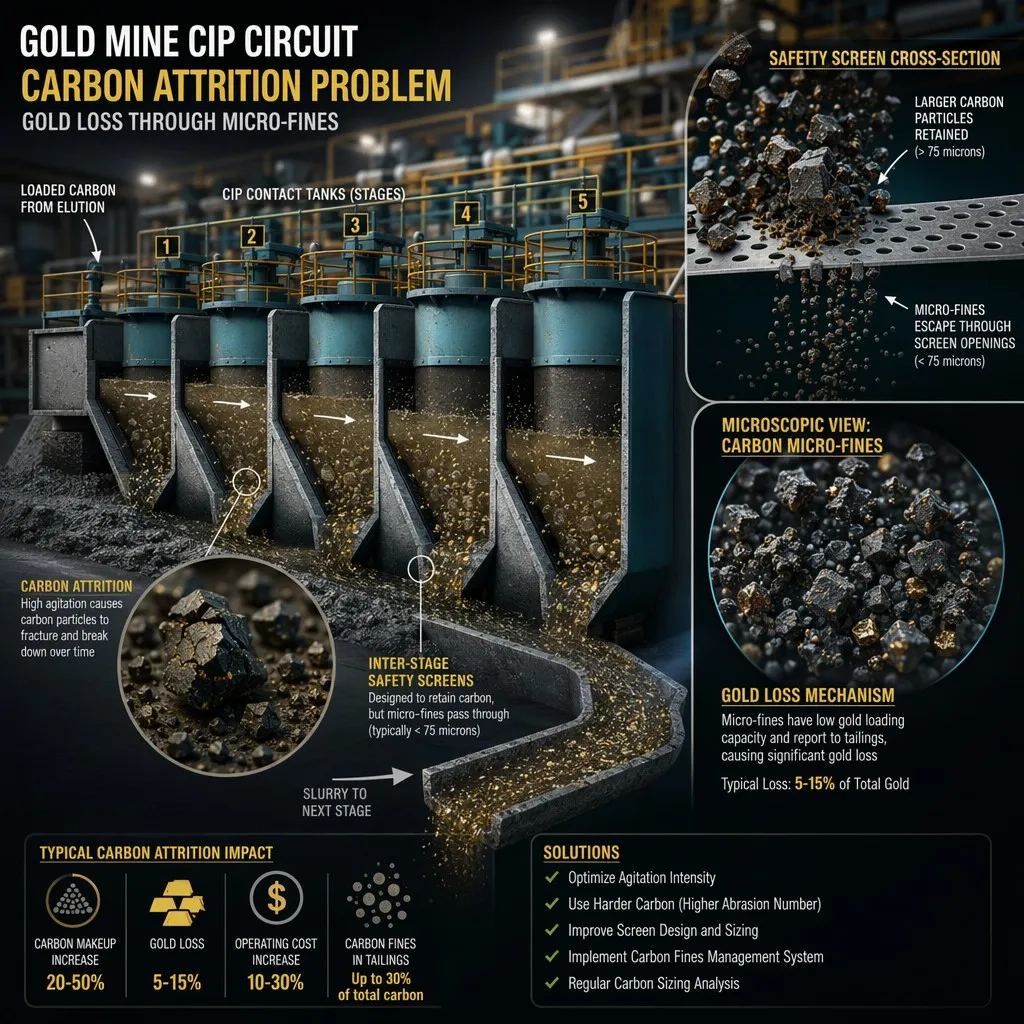
Figure 1: Cross-section visualization of CIP circuit showing carbon attrition micro-fines carrying adsorbed gold through inter-stage safety screens.
Abstract: Procurement departments in gold mining operations are incentivized to reduce the unit price of consumables—and activated carbon, at 2–5% of total processing costs, is an easy target. However, the true cost of carbon is not its purchase price per tonne; it is the gold that escapes to tailings through carbon fines and the production hours lost to screen blinding. This technical brief quantifies the hidden financial toll of substandard carbon and presents two forensic case studies from Canada and Australia where switching to a premium engineered carbon delivered rapid, measurable returns.
1. The Two Silent Profit Killers in Every CIP/CIL Circuit
Operators and metallurgists understand that gold recovery circuits are a mass balance game: every gram of gold entering the plant must be accounted for in either the doré bar or the tailings. What many fail to appreciate is the degree to which the activated carbon itself is a direct vector for gold loss. Two mechanisms dominate:
1.1 Gold-in-Fines: The Carbon That Takes Gold to the Tailings Pond
In high-shear agitated CIP/CIL tanks, carbon particles continuously collide with impellers, tank walls, and each other. Low-hardness carbon (ASTM D3802 < 98%) fractures under this mechanical stress, generating sub-100 μm micro-fines. These fines have already adsorbed gold-cyanide complexes—their loaded gold content is identical to the main carbon inventory. The inter-stage safety screens, typically 0.6–0.8 mm aperture, cannot retain these particles. The fines—and the gold they carry—flow directly to the tailings pond.
Quantifying the Loss: A 100,000 oz/year plant with carbon containing 3,000 g Au/tonne and generating just 0.5% daily fines from a 12-tonne carbon inventory loses approximately 180 grams of gold per day in fines alone—equivalent to roughly USD 450,000 per year at current gold prices. This is gold that was captured, loaded, and then irrevocably lost through mechanical failure of the carbon media.
1.2 Screen Blinding: The Production Bottleneck Nobody Budgets For
Carbon with poor particle size distribution (PSD) contains excessive near-size particles and irregular grains. These particles lodge in the aperture slots of inter-stage screens, progressively reducing the open area. As blinding worsens, pump back-pressure increases, slurry flow rates decline, and the circuit must be taken offline for screen cleaning. For a plant operating at nameplate capacity, unplanned downtime is catastrophic: every hour offline represents lost gold production that can never be recovered.
Quantifying the Downtime Cost: A 50,000 oz/year plant losing just 4 hours per week to screen cleaning forfeits approximately 208 production hours annually—equivalent to over 8 full days of lost throughput. At a head grade of 1.8 g/t and 92% plant recovery, this represents roughly 1,100 ounces of unrecovered gold per year.
2. Cheap Carbon vs. Engineered Carbon: A Cost-of-Ownership Analysis
The table below compares the all-in cost of a commodity-grade carbon (USD 2,800/tonne) against a premium engineered carbon (USD 3,400/tonne) for a hypothetical 80,000 oz/year CIL plant with a 14-tonne carbon inventory:
|
Cost Element |
Commodity Carbon |
YICARB Premium |
Annual Difference |
|
Carbon Purchase |
USD 39,200 |
USD 47,600 |
+ USD 8,400 |
|
Make-Up Rate (g/t ore) |
55 |
28 |
|
|
Annual Make-Up Cost |
USD 69,300 |
USD 35,280 |
− USD 34,020 |
|
Gold-in-Fines Loss |
USD 285,000 |
USD 38,000 |
− USD 247,000 |
|
Screen Cleaning Downtime |
USD 162,000 |
USD 18,000 |
− USD 144,000 |
|
Total Annual Carbon Cost |
USD 555,500 |
USD 138,880 |
− USD 416,620 |
The premium carbon, despite a 21% higher purchase price, delivers a 75% reduction in total annual carbon-related costs through lower attrition, fewer fines, and near-zero downtime.
3. Forensic Case Studies: When Cheap Carbon Became Very Expensive
Case 3.1: Attrition-Driven Gold Loss in a High-Throughput CIP Circuit (Ontario, Canada)
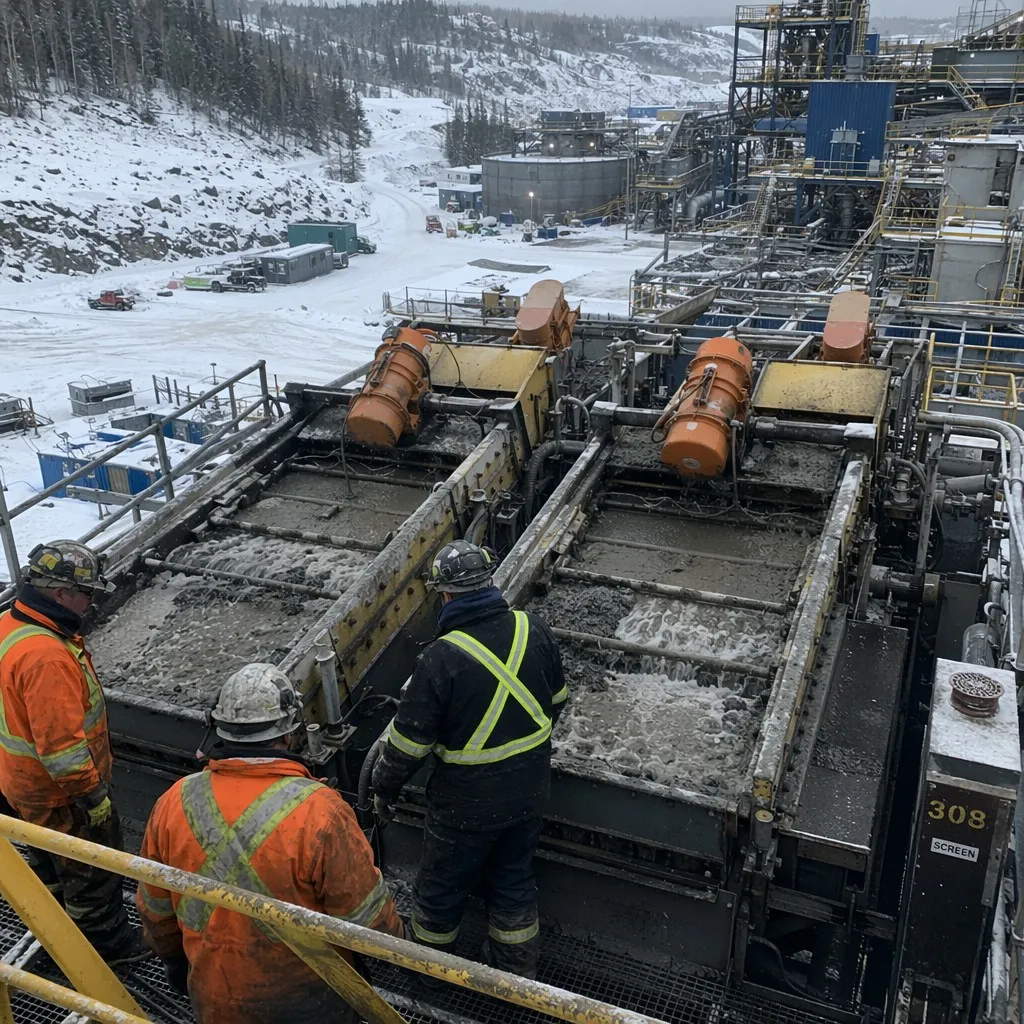
Figure 2: CIP processing plant in Ontario, Canada, where inter-stage screen blinding from carbon fines was causing weekly production losses.
Operational Challenge: A mid-tier gold producer in Ontario’s Red Lake district, processing 650,000 tonnes/year through a 6-stage CIP circuit, had switched to a low-cost Southeast Asian coconut carbon (ASTM Hardness 96.5%, quoted at USD 2,650/tonne) to reduce consumable expenditure. Within 90 days, the metallurgy team observed a troubling trend: soluble gold in tailings had climbed from a baseline of 0.04 g/t to 0.11 g/t—an increase of 0.07 g/t that could not be explained by head grade or cyanide consumption.
Carbon mass balance audits revealed the root cause: daily carbon make-up had surged from the design rate of 32 g/t ore to 63 g/t, and sampling of the tailings stream showed 18% of the total gold loss was associated with carbon fines passing the 0.8 mm inter-stage screens. The carbon was simply disintegrating under the impeller shear forces of the 8-meter-diameter agitated tanks. Gold-in-fines losses were conservatively estimated at 370 grams per day.
The YICARB Solution: We conducted an on-site carbon audit and replaced the commodity carbon with YICARB DuraGold Premium Coconut Carbon (6×12 mesh, ASTM Hardness 99.3%, Iodine 1080 mg/g, PSD > 96% on-spec). The carbon was pre-attritioned at our facility to remove weak grains and sharp edges before shipment—eliminating the initial break-in period of fines generation that plagues most carbon change-outs.
Results: Soluble gold in tailings dropped back to 0.04 g/t within 14 days of the change-out. Carbon make-up rate fell to 29 g/t ore—below the original design specification. Gold-in-fines losses were reduced by 92%. The total annual financial impact was a net saving of USD 388,000 after accounting for the higher carbon purchase price. The mine’s general manager later noted: ‘We were saving USD 15,000 on carbon and losing USD 350,000 in gold. It was the worst trade we ever made.’
Case 3.2: Screen Blinding Paralysis in a Remote CIL Operation (Western Australia)
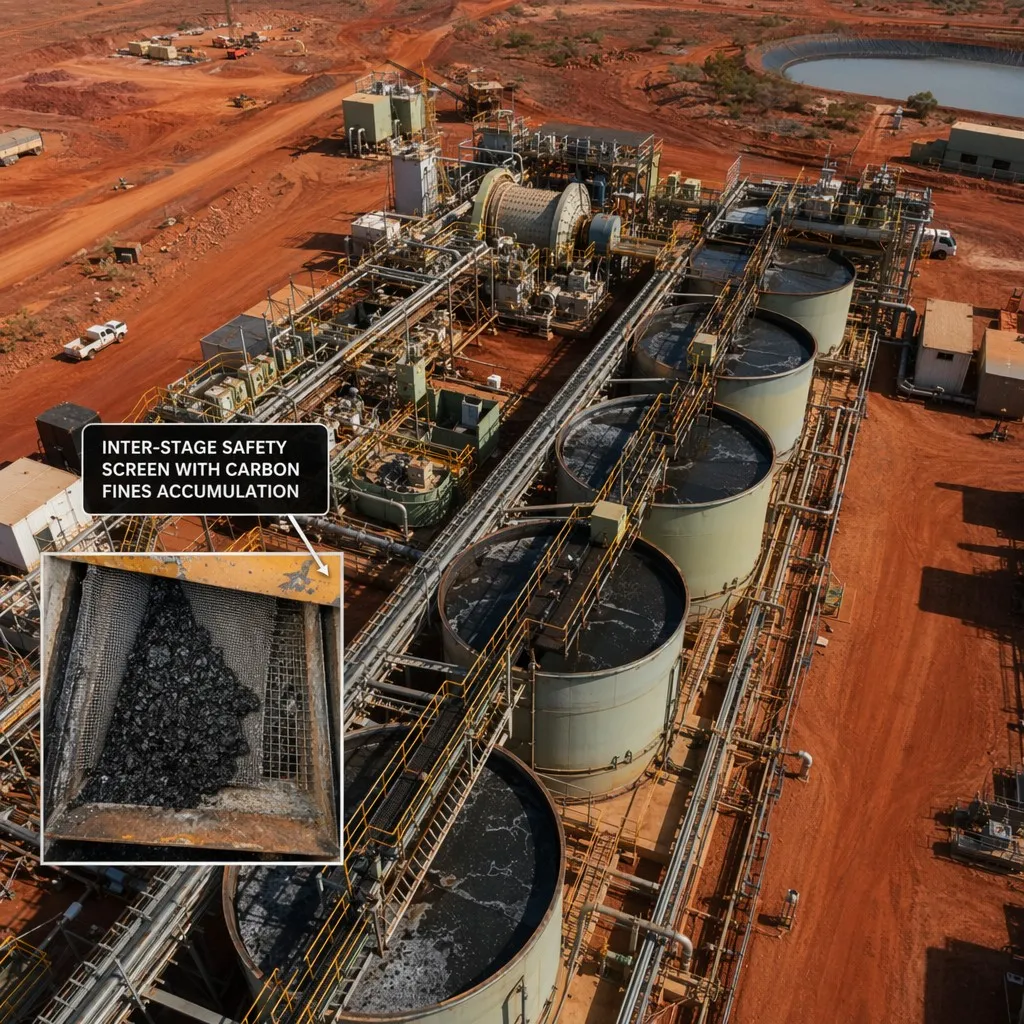
Figure 3: CIL processing facility in Western Australia’s Goldfields region, where PSD-related screen blinding was causing chronic downtime.
Operational Challenge: A junior producer in Western Australia’s Leonora region, running a single-train CIL circuit at 400,000 tonnes/year, was experiencing crippling inter-stage screen blinding. The incumbent carbon supplier delivered an inconsistent product with a wide PSD—only 78% of particles falling within the specified 8×16 mesh range. Near-size particles (7–8 mesh and 16–18 mesh fractions) were lodging in the 0.8 mm aperture wedge-wire screens, reducing open area by up to 40% within 72 hours of operation.
The impact was severe: the maintenance team was forced to take individual tanks offline for screen cleaning 14 times per month, with each event requiring 3.5 hours of downtime and consuming 8,000 litres of high-pressure process water per cleaning cycle. Monthly production losses averaged 270 ounces of gold—gold that was dissolved in solution but could not be contacted with carbon because the slurry could not flow. Additionally, two pump impellers were replaced within six months due to cavitation damage from the elevated back-pressure.
The YICARB Solution: We implemented YICARB PrecisionScreen GAC (8×16 mesh, ASTM Hardness 99.2%, PSD uniformity 97% on-spec). The carbon underwent triple-pass vibratory screening at our facility with statistical process control (SPC) monitoring every 500 kg batch. The guaranteed PSD narrow cut eliminated the near-size fraction that was causing blinding, while the high hardness ensured attrition resistance under tank agitation.
Results: Screen cleaning events dropped from 14 per month to 2 per month—an 86% reduction. Monthly gold production increased by 290 ounces simply by eliminating the downtime that had prevented carbon-gold contact. Pump maintenance costs fell by USD 42,000 annually. Process water consumption for screen cleaning was reduced by 1.1 million litres per year—a critical saving in water-scarce Western Australia. The total annual financial benefit was USD 586,000 against a carbon price premium of just USD 12,400.
4. Conclusion: The Real Price of Carbon Is Measured in Gold, Not Dollars per Tonne
The two case studies presented above share a common lesson: the purchase price of activated carbon represents less than 10% of its true cost to a gold mining operation. The remaining 90%—attrition-driven gold losses, screen blinding downtime, excessive make-up rates, and collateral equipment damage—is invisible on the procurement invoice but devastating on the profit-and-loss statement.
A rigorous carbon specification should be treated with the same discipline as cyanide dosing or mill grind size. YICARB’s engineered carbon solutions are backed by documented hardness certification, PSD analysis, and pre-attrition processing—ensuring that every kilogram of carbon in your circuit is capturing gold, not losing it.
When evaluating carbon suppliers, ask not “what does this carbon cost per tonne?” but rather “what will this carbon cost me in lost gold, lost time, and lost throughput?” The answer will always lead you to the engineered solution.
Why Low-Price Activated Carbon Is the Most Expensive Decision a Gold Mine Can Make
Date: July 30th, 2026
Author: Yicarb Technical Expert (15+ years experience in activated carbon industry
Note: The examples presented in this article are illustrative scenarios based on common challenges in gold recovery operations. They are intended to demonstrate technical considerations and potential outcomes under specific operating conditions. Actual performance may vary depending on ore characteristics, process parameters and operational factors.
Figure 1: Cross-section visualization of CIP circuit showing carbon attrition micro-fines carrying adsorbed gold through inter-stage safety screens.
Abstract: Procurement departments in gold mining operations are incentivized to reduce the unit price of consumables—and activated carbon, at 2–5% of total processing costs, is an easy target. However, the true cost of carbon is not its purchase price per tonne; it is the gold that escapes to tailings through carbon fines and the production hours lost to screen blinding. This technical brief quantifies the hidden financial toll of substandard carbon and presents two forensic case studies from Canada and Australia where switching to a premium engineered carbon delivered rapid, measurable returns.
1. The Two Silent Profit Killers in Every CIP/CIL Circuit
Operators and metallurgists understand that gold recovery circuits are a mass balance game: every gram of gold entering the plant must be accounted for in either the doré bar or the tailings. What many fail to appreciate is the degree to which the activated carbon itself is a direct vector for gold loss. Two mechanisms dominate:
1.1 Gold-in-Fines: The Carbon That Takes Gold to the Tailings Pond
In high-shear agitated CIP/CIL tanks, carbon particles continuously collide with impellers, tank walls, and each other. Low-hardness carbon (ASTM D3802 < 98%) fractures under this mechanical stress, generating sub-100 μm micro-fines. These fines have already adsorbed gold-cyanide complexes—their loaded gold content is identical to the main carbon inventory. The inter-stage safety screens, typically 0.6–0.8 mm aperture, cannot retain these particles. The fines—and the gold they carry—flow directly to the tailings pond.
Quantifying the Loss: A 100,000 oz/year plant with carbon containing 3,000 g Au/tonne and generating just 0.5% daily fines from a 12-tonne carbon inventory loses approximately 180 grams of gold per day in fines alone—equivalent to roughly USD 450,000 per year at current gold prices. This is gold that was captured, loaded, and then irrevocably lost through mechanical failure of the carbon media.
1.2 Screen Blinding: The Production Bottleneck Nobody Budgets For
Carbon with poor particle size distribution (PSD) contains excessive near-size particles and irregular grains. These particles lodge in the aperture slots of inter-stage screens, progressively reducing the open area. As blinding worsens, pump back-pressure increases, slurry flow rates decline, and the circuit must be taken offline for screen cleaning. For a plant operating at nameplate capacity, unplanned downtime is catastrophic: every hour offline represents lost gold production that can never be recovered.
Quantifying the Downtime Cost: A 50,000 oz/year plant losing just 4 hours per week to screen cleaning forfeits approximately 208 production hours annually—equivalent to over 8 full days of lost throughput. At a head grade of 1.8 g/t and 92% plant recovery, this represents roughly 1,100 ounces of unrecovered gold per year.
2. Cheap Carbon vs. Engineered Carbon: A Cost-of-Ownership Analysis
The table below compares the all-in cost of a commodity-grade carbon (USD 2,800/tonne) against a premium engineered carbon (USD 3,400/tonne) for a hypothetical 80,000 oz/year CIL plant with a 14-tonne carbon inventory:
|
Cost Element |
Commodity Carbon |
YICARB Premium |
Annual Difference |
|
Carbon Purchase |
USD 39,200 |
USD 47,600 |
+ USD 8,400 |
|
Make-Up Rate (g/t ore) |
55 |
28 |
|
|
Annual Make-Up Cost |
USD 69,300 |
USD 35,280 |
− USD 34,020 |
|
Gold-in-Fines Loss |
USD 285,000 |
USD 38,000 |
− USD 247,000 |
|
Screen Cleaning Downtime |
USD 162,000 |
USD 18,000 |
− USD 144,000 |
|
Total Annual Carbon Cost |
USD 555,500 |
USD 138,880 |
− USD 416,620 |
The premium carbon, despite a 21% higher purchase price, delivers a 75% reduction in total annual carbon-related costs through lower attrition, fewer fines, and near-zero downtime.
3. Forensic Case Studies: When Cheap Carbon Became Very Expensive
Case 3.1: Attrition-Driven Gold Loss in a High-Throughput CIP Circuit (Ontario, Canada)
Figure 2: CIP processing plant in Ontario, Canada, where inter-stage screen blinding from carbon fines was causing weekly production losses.
Operational Challenge: A mid-tier gold producer in Ontario’s Red Lake district, processing 650,000 tonnes/year through a 6-stage CIP circuit, had switched to a low-cost Southeast Asian coconut carbon (ASTM Hardness 96.5%, quoted at USD 2,650/tonne) to reduce consumable expenditure. Within 90 days, the metallurgy team observed a troubling trend: soluble gold in tailings had climbed from a baseline of 0.04 g/t to 0.11 g/t—an increase of 0.07 g/t that could not be explained by head grade or cyanide consumption.
Carbon mass balance audits revealed the root cause: daily carbon make-up had surged from the design rate of 32 g/t ore to 63 g/t, and sampling of the tailings stream showed 18% of the total gold loss was associated with carbon fines passing the 0.8 mm inter-stage screens. The carbon was simply disintegrating under the impeller shear forces of the 8-meter-diameter agitated tanks. Gold-in-fines losses were conservatively estimated at 370 grams per day.
The YICARB Solution: We conducted an on-site carbon audit and replaced the commodity carbon with YICARB DuraGold Premium Coconut Carbon (6×12 mesh, ASTM Hardness 99.3%, Iodine 1080 mg/g, PSD > 96% on-spec). The carbon was pre-attritioned at our facility to remove weak grains and sharp edges before shipment—eliminating the initial break-in period of fines generation that plagues most carbon change-outs.
Results: Soluble gold in tailings dropped back to 0.04 g/t within 14 days of the change-out. Carbon make-up rate fell to 29 g/t ore—below the original design specification. Gold-in-fines losses were reduced by 92%. The total annual financial impact was a net saving of USD 388,000 after accounting for the higher carbon purchase price. The mine’s general manager later noted: ‘We were saving USD 15,000 on carbon and losing USD 350,000 in gold. It was the worst trade we ever made.’
Case 3.2: Screen Blinding Paralysis in a Remote CIL Operation (Western Australia)
Figure 3: CIL processing facility in Western Australia’s Goldfields region, where PSD-related screen blinding was causing chronic downtime.
Operational Challenge: A junior producer in Western Australia’s Leonora region, running a single-train CIL circuit at 400,000 tonnes/year, was experiencing crippling inter-stage screen blinding. The incumbent carbon supplier delivered an inconsistent product with a wide PSD—only 78% of particles falling within the specified 8×16 mesh range. Near-size particles (7–8 mesh and 16–18 mesh fractions) were lodging in the 0.8 mm aperture wedge-wire screens, reducing open area by up to 40% within 72 hours of operation.
The impact was severe: the maintenance team was forced to take individual tanks offline for screen cleaning 14 times per month, with each event requiring 3.5 hours of downtime and consuming 8,000 litres of high-pressure process water per cleaning cycle. Monthly production losses averaged 270 ounces of gold—gold that was dissolved in solution but could not be contacted with carbon because the slurry could not flow. Additionally, two pump impellers were replaced within six months due to cavitation damage from the elevated back-pressure.
The YICARB Solution: We implemented YICARB PrecisionScreen GAC (8×16 mesh, ASTM Hardness 99.2%, PSD uniformity 97% on-spec). The carbon underwent triple-pass vibratory screening at our facility with statistical process control (SPC) monitoring every 500 kg batch. The guaranteed PSD narrow cut eliminated the near-size fraction that was causing blinding, while the high hardness ensured attrition resistance under tank agitation.
Results: Screen cleaning events dropped from 14 per month to 2 per month—an 86% reduction. Monthly gold production increased by 290 ounces simply by eliminating the downtime that had prevented carbon-gold contact. Pump maintenance costs fell by USD 42,000 annually. Process water consumption for screen cleaning was reduced by 1.1 million litres per year—a critical saving in water-scarce Western Australia. The total annual financial benefit was USD 586,000 against a carbon price premium of just USD 12,400.
4. Conclusion: The Real Price of Carbon Is Measured in Gold, Not Dollars per Tonne
The two case studies presented above share a common lesson: the purchase price of activated carbon represents less than 10% of its true cost to a gold mining operation. The remaining 90%—attrition-driven gold losses, screen blinding downtime, excessive make-up rates, and collateral equipment damage—is invisible on the procurement invoice but devastating on the profit-and-loss statement.
A rigorous carbon specification should be treated with the same discipline as cyanide dosing or mill grind size. YICARB’s engineered carbon solutions are backed by documented hardness certification, PSD analysis, and pre-attrition processing—ensuring that every kilogram of carbon in your circuit is capturing gold, not losing it.
When evaluating carbon suppliers, ask not “what does this carbon cost per tonne?” but rather “what will this carbon cost me in lost gold, lost time, and lost throughput?” The answer will always lead you to the engineered solution.
Products
Solutions
Performance
Markets & Cases
Resources
Manufacturing & Quality
About Us
Contact Us

Copyright © 2026 Guangdong Yicarb Activated Carbon Co., Ltd. All Rights Reserved.