
South Africa
Technical Scenario 1: Attrition Control in a High-Shear South African CIP Circuit
|
Illustrative circuit image; no specific customer or site test data referenced. |
|
Typical Operating Challenge: High fines generation in an agitated circuit may reflect carbon weakness, ore abrasivity, agitator and pump conditions, carbon concentration, transfer practice, screen wear, or regeneration damage. A supplier hardness result is useful for incoming control but does not reproduce every in-circuit stress. Technical Assessment: Sample carbon at defined points through the operating cycle, compare fresh and in-circuit particle integrity, inspect transfer and screening equipment, and relate the findings to recorded operating conditions. Where the mine assays fine fractions, use its approved chain of custody and mass-balance method. YICARB® Technical Approach: YICARB® would evaluate a suitable AU Series grade for adsorption and mechanical requirements and provide traceable batch data. Changes to impeller speed, pump duty, or other plant settings must be assessed and authorized by the mine's process and equipment specialists; they should not be presented as a carbon-supplier action without evidence. Verification Before Any Performance Claim: Compare matched operating periods and track carbon make-up, particle-size change, screen interventions, and gold associated with relevant fines. Publish no recovery or cost outcome until the mine confirms the result and its calculation basis. Learn More: For verified site case studies with authorized mine data, contact our technical team to request confidential project references. |

Technical Scenario 1: Attrition Control in a High-Shear South African CIP Circuit
|
Illustrative circuit image; no specific customer or site test data referenced. |
|
Typical Operating Challenge: High fines generation in an agitated circuit may reflect carbon weakness, ore abrasivity, agitator and pump conditions, carbon concentration, transfer practice, screen wear, or regeneration damage. A supplier hardness result is useful for incoming control but does not reproduce every in-circuit stress. Technical Assessment: Sample carbon at defined points through the operating cycle, compare fresh and in-circuit particle integrity, inspect transfer and screening equipment, and relate the findings to recorded operating conditions. Where the mine assays fine fractions, use its approved chain of custody and mass-balance method. YICARB® Technical Approach: YICARB® would evaluate a suitable AU Series grade for adsorption and mechanical requirements and provide traceable batch data. Changes to impeller speed, pump duty, or other plant settings must be assessed and authorized by the mine's process and equipment specialists; they should not be presented as a carbon-supplier action without evidence. Verification Before Any Performance Claim: Compare matched operating periods and track carbon make-up, particle-size change, screen interventions, and gold associated with relevant fines. Publish no recovery or cost outcome until the mine confirms the result and its calculation basis. Learn More: For verified site case studies with authorized mine data, contact our technical team to request confidential project references. |
Technical Scenario 2: Diagnosing Carbon Fouling and Regeneration Stability in a South African Retreatment Circuit
|
Illustrative circuit image; no specific customer or site test data referenced. |
|
Typical Operating Challenge: A decline in regenerated-carbon activity can result from organic or inorganic fouling, incomplete elution, unsuitable regeneration conditions, excessive thermal damage, ash accumulation, or sampling differences. Iodine number alone cannot identify the foulant or prove that regeneration is effective. Technical Assessment: Compare virgin, loaded, eluted, acid-washed, and regenerated carbon using consistent methods. Review adsorption kinetics or capacity indicators together with particle-size distribution, hardness, ash, deposit or surface analysis where available, and the actual elution and regeneration records. YICARB® Technical Approach: YICARB® can compare the regeneration stability of relevant AU Series grades and help define the carbon sampling plan. Kiln temperature, residence time, atmosphere, steam, and feed conditions must be reviewed with the mine and equipment supplier under the site's safety and operating procedures; no universal setpoint should be prescribed from a generic scenario. Verification Before Any Performance Claim: Demonstrate stability across repeated, documented cycles and link laboratory changes to the plant solution and carbon profiles. Claims about replacement frequency, recovered gold, or savings require a customer-approved baseline and calculation. Learn More: For verified site case studies with authorized mine data, contact our technical team to request confidential project references. |
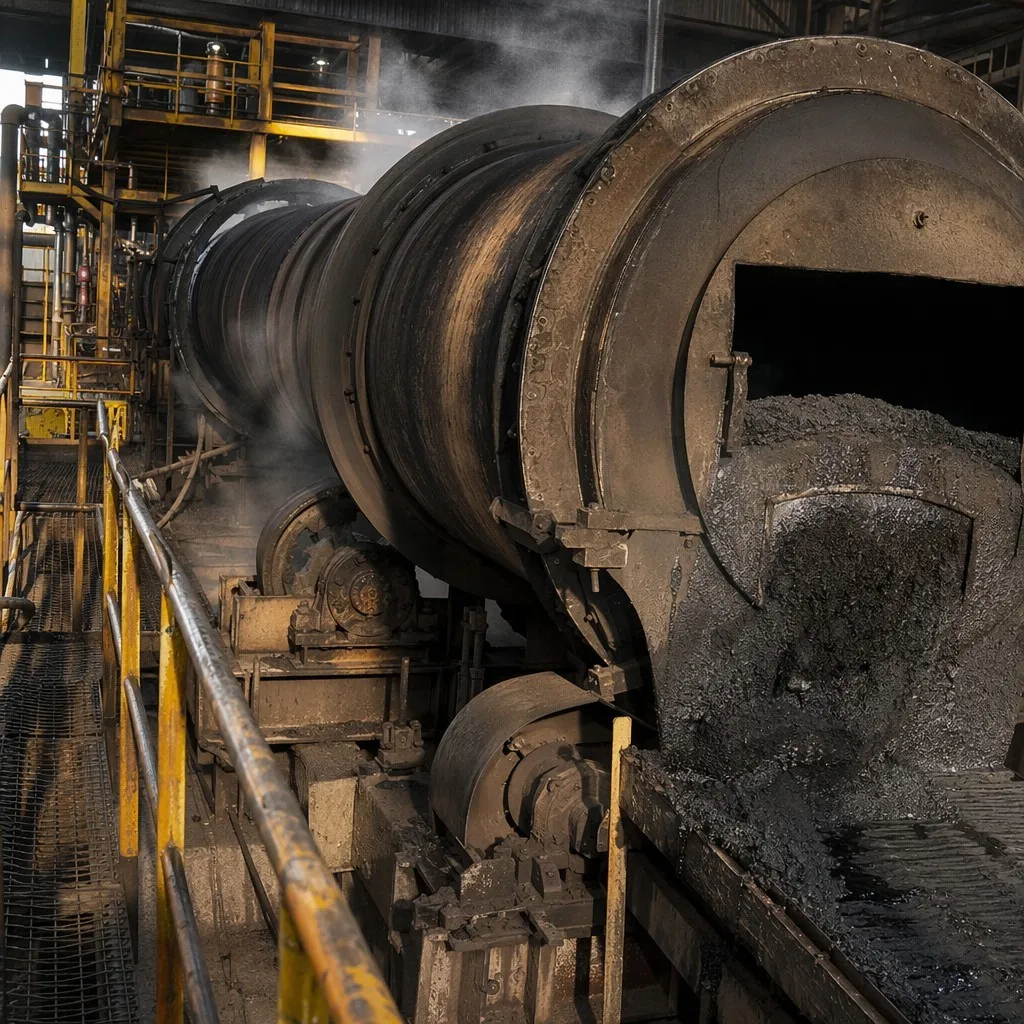
Technical Scenario 2: Diagnosing Carbon Fouling and Regeneration Stability in a South African Retreatment Circuit
|
Illustrative circuit image; no specific customer or site test data referenced. |
|
Typical Operating Challenge: A decline in regenerated-carbon activity can result from organic or inorganic fouling, incomplete elution, unsuitable regeneration conditions, excessive thermal damage, ash accumulation, or sampling differences. Iodine number alone cannot identify the foulant or prove that regeneration is effective. Technical Assessment: Compare virgin, loaded, eluted, acid-washed, and regenerated carbon using consistent methods. Review adsorption kinetics or capacity indicators together with particle-size distribution, hardness, ash, deposit or surface analysis where available, and the actual elution and regeneration records. YICARB® Technical Approach: YICARB® can compare the regeneration stability of relevant AU Series grades and help define the carbon sampling plan. Kiln temperature, residence time, atmosphere, steam, and feed conditions must be reviewed with the mine and equipment supplier under the site's safety and operating procedures; no universal setpoint should be prescribed from a generic scenario. Verification Before Any Performance Claim: Demonstrate stability across repeated, documented cycles and link laboratory changes to the plant solution and carbon profiles. Claims about replacement frequency, recovered gold, or savings require a customer-approved baseline and calculation. Learn More: For verified site case studies with authorized mine data, contact our technical team to request confidential project references. |
ㅤ

Products
Solutions
Performance
Markets & Cases
Resources
Manufacturing & Quality
About Us
Contact Us

Copyright © 2026 Guangdong Yicarb Activated Carbon Co., Ltd. All Rights Reserved.