
Ghana
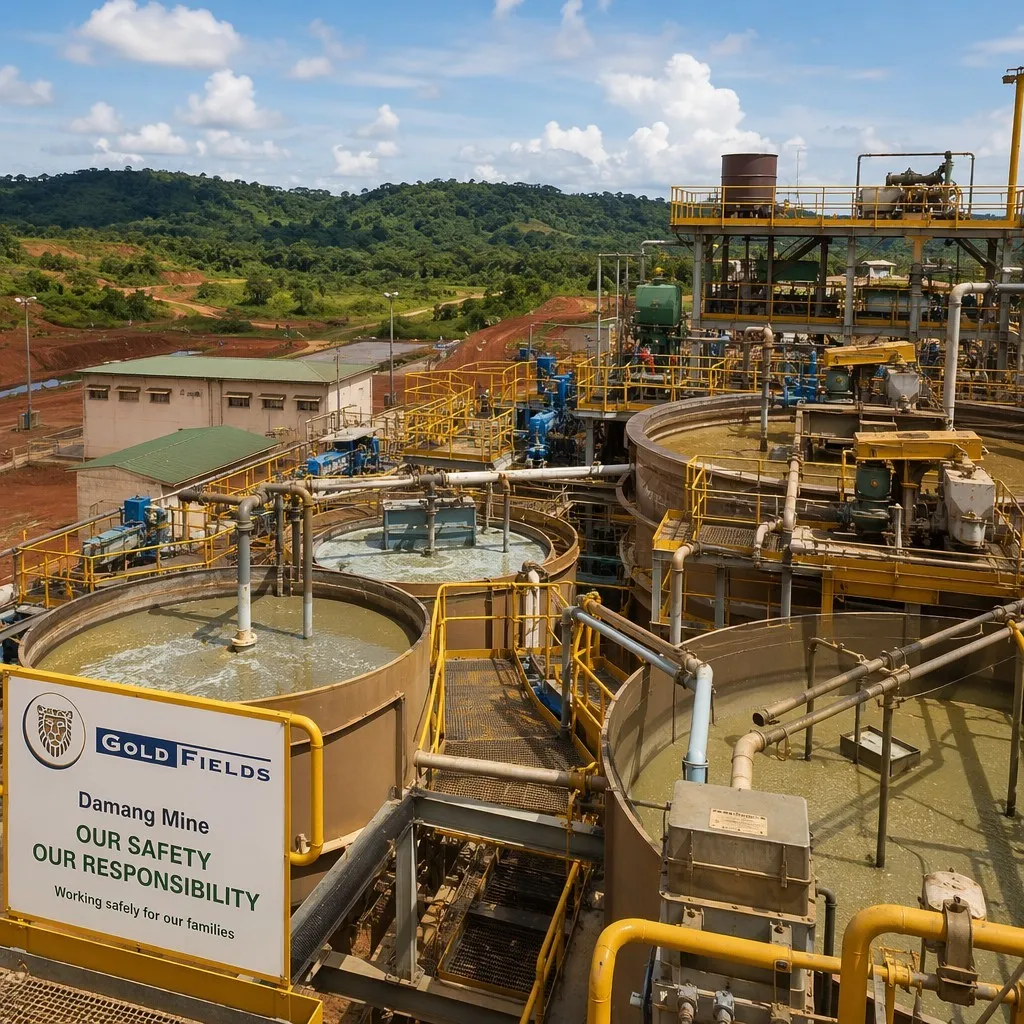
Technical Scenario 1: Assessing Preg-Robbing Risk in a Ghanaian CIL Circuit
|
Illustrative circuit image; no specific customer or site test data referenced. |
|
Typical Operating Challenge: Ore from different mining areas or benches can show different preg-robbing behavior. When dissolved gold is removed by naturally adsorptive material, the plant may observe changes in solution and residue profiles that cannot be explained by activated carbon specification alone. Technical Assessment: Confirm the mechanism with representative ore samples, mineralogical review, and comparative leach or CIL test work. Review residence time, oxygen, cyanide, pH, solution chemistry, carbon concentration, advance rate, and the condition of fresh and regenerated carbon. YICARB® Technical Approach: Where the evidence indicates that adsorption kinetics are limiting, YICARB® can compare appropriate AU Series grades using the same test method and site solution. Mechanical integrity and particle-size control must remain part of the selection because a faster laboratory response does not compensate for poor in-circuit retention. Verification Before Any Performance Claim: Use a controlled plant trial across representative ore campaigns. Recovery, soluble-loss, production, or payback claims require an approved site mass balance and customer authorization; they must not be inferred from laboratory R-Value or iodine number alone. Learn More: For verified site case studies with authorized mine data, contact our technical team to request confidential project references. |
Technical Scenario 1: Assessing Preg-Robbing Risk in a Ghanaian CIL Circuit
|
Illustrative circuit image; no specific customer or site test data referenced. |
|
Typical Operating Challenge: Ore from different mining areas or benches can show different preg-robbing behavior. When dissolved gold is removed by naturally adsorptive material, the plant may observe changes in solution and residue profiles that cannot be explained by activated carbon specification alone. Technical Assessment: Confirm the mechanism with representative ore samples, mineralogical review, and comparative leach or CIL test work. Review residence time, oxygen, cyanide, pH, solution chemistry, carbon concentration, advance rate, and the condition of fresh and regenerated carbon. YICARB® Technical Approach: Where the evidence indicates that adsorption kinetics are limiting, YICARB® can compare appropriate AU Series grades using the same test method and site solution. Mechanical integrity and particle-size control must remain part of the selection because a faster laboratory response does not compensate for poor in-circuit retention. Verification Before Any Performance Claim: Use a controlled plant trial across representative ore campaigns. Recovery, soluble-loss, production, or payback claims require an approved site mass balance and customer authorization; they must not be inferred from laboratory R-Value or iodine number alone. Learn More: For verified site case studies with authorized mine data, contact our technical team to request confidential project references. |
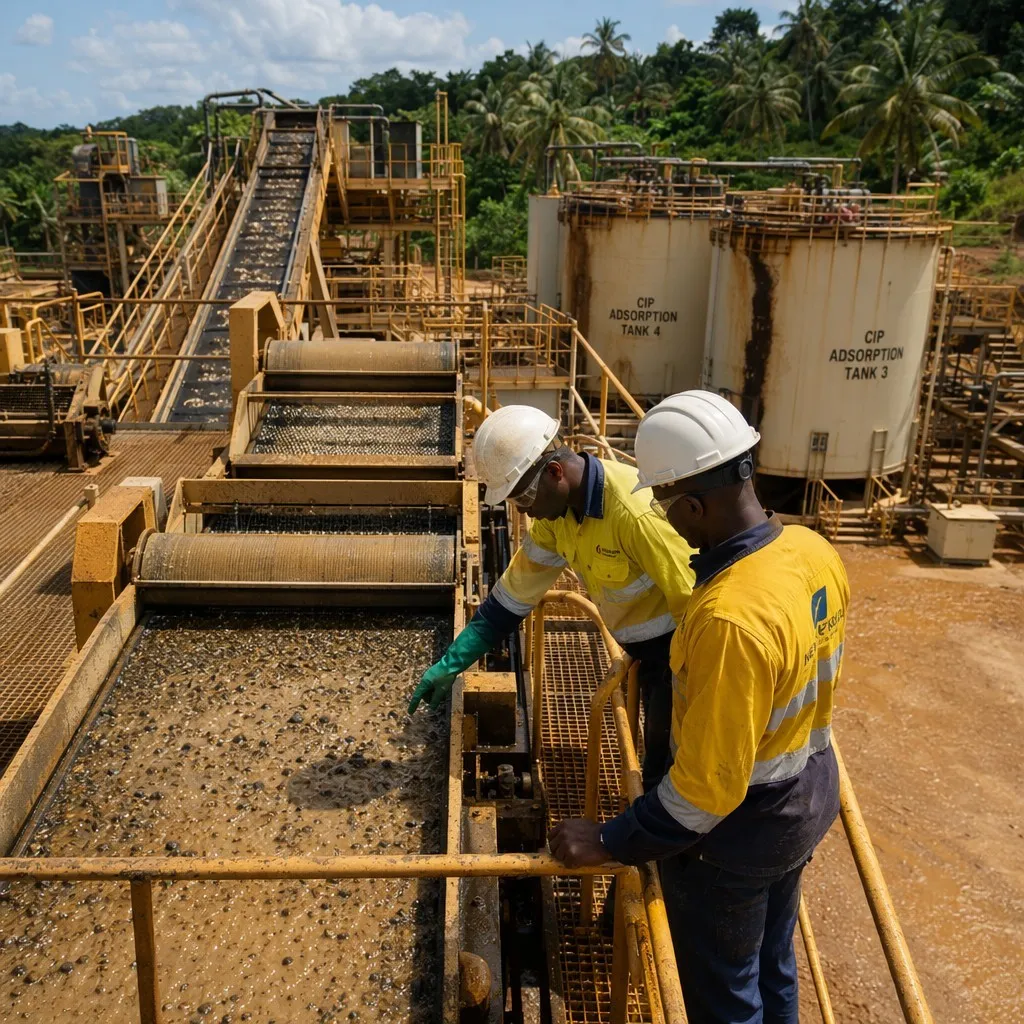
Technical Scenario 2: Investigating Screen Blinding and Carbon PSD in a Ghanaian CIP Circuit
|
Illustrative circuit image; no specific customer or site test data referenced. |
|
Typical Operating Challenge: Screen blinding can be associated with near-size particles, platelets, weak grains, damaged screen panels, inappropriate aperture, pulp density, hydraulic loading, or carbon-transfer practice. The nominal mesh label does not show the complete particle-size distribution. Technical Assessment: Take representative samples from the incoming carbon and relevant circuit points, perform a full sieve analysis, identify near-size and irregular particles, and inspect the screen panels and operating conditions. Record sample timing and ore conditions so that unrelated changes are not attributed to the carbon. YICARB® Technical Approach: YICARB® would match the appropriate AU Series particle-size option to the site's screen and process requirements and provide lot-specific sieve documentation. A controlled trial should include agreed limits for on-size material and a clear procedure for receiving inspection. Verification Before Any Performance Claim: Track screen condition, cleaning interventions, carbon transfer, particle-size change, and fines in the circuit using the same definitions before and during the trial. Do not publish saved hours, recovered gold, or maintenance cost without customer-approved records. Learn More: For verified site case studies with authorized mine data, contact our technical team to request confidential project references. |
Technical Scenario 2: Investigating Screen Blinding and Carbon PSD in a Ghanaian CIP Circuit
|
Illustrative circuit image; no specific customer or site test data referenced. |
|
Typical Operating Challenge: Screen blinding can be associated with near-size particles, platelets, weak grains, damaged screen panels, inappropriate aperture, pulp density, hydraulic loading, or carbon-transfer practice. The nominal mesh label does not show the complete particle-size distribution. Technical Assessment: Take representative samples from the incoming carbon and relevant circuit points, perform a full sieve analysis, identify near-size and irregular particles, and inspect the screen panels and operating conditions. Record sample timing and ore conditions so that unrelated changes are not attributed to the carbon. YICARB® Technical Approach: YICARB® would match the appropriate AU Series particle-size option to the site's screen and process requirements and provide lot-specific sieve documentation. A controlled trial should include agreed limits for on-size material and a clear procedure for receiving inspection. Verification Before Any Performance Claim: Track screen condition, cleaning interventions, carbon transfer, particle-size change, and fines in the circuit using the same definitions before and during the trial. Do not publish saved hours, recovered gold, or maintenance cost without customer-approved records. Learn More: For verified site case studies with authorized mine data, contact our technical team to request confidential project references. |
ㅤ

Products
Solutions
Performance
Markets & Cases
Resources
Manufacturing & Quality
About Us
Contact Us

Copyright © 2026 Guangdong Yicarb Activated Carbon Co., Ltd. All Rights Reserved.