
Mali
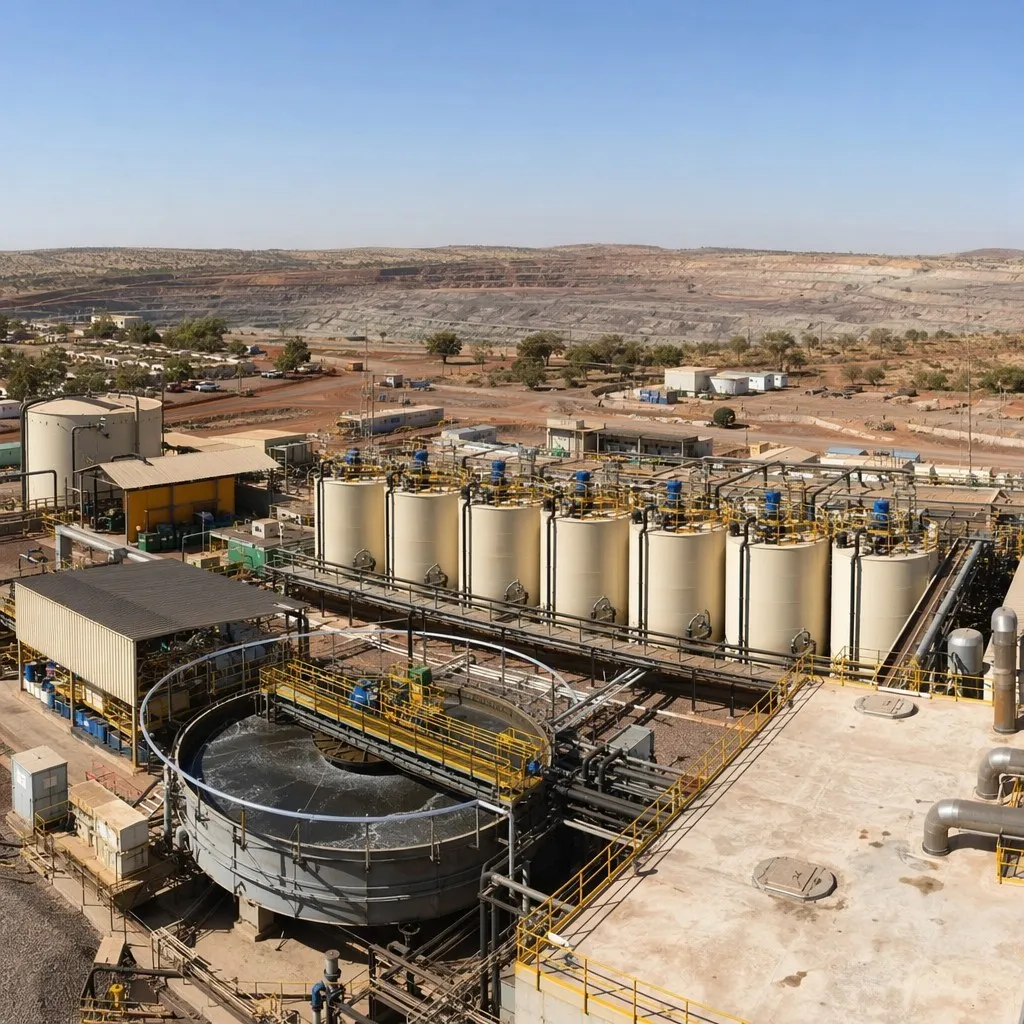
Technical Scenario 1: Carbon Supply Planning for a Remote Sahel CIL Operation
|
Illustrative circuit image; no specific customer or site test data referenced. |
|
Typical Operating Challenge: At a remote mine, variable shipping and inland transport times can make activated carbon availability a production risk. Emergency purchasing can also introduce inconsistent particle-size distribution or incomplete quality documentation. The required inventory buffer is site-specific and should not be represented by a universal number. Technical Assessment: Use actual consumption history, shipment variability, seasonal access, customs experience, storage capacity, and the mine's risk tolerance to establish reorder points and safety stock. Review incoming certificates and receiving-test results to separate logistics risk from product consistency. YICARB® Technical Approach: YICARB® would agree the AU Series grade, packaging, batch documentation, shipment plan, and communication checkpoints with the customer. Any claim about regional stock, guaranteed delivery, or a specific lead time may be published only if the corresponding service is operational and contractually supported. Verification Before Any Performance Claim: Track delivery performance, receiving-test conformity, stock coverage, emergency shipments, and any carbon-related production constraint. Do not convert a supply proposal into a completed customer case or claim avoided gold loss without verified records. Learn More: For verified site case studies with authorized mine data, contact our technical team to request confidential project references. |
Technical Scenario 1: Carbon Supply Planning for a Remote Sahel CIL Operation
|
Illustrative circuit image; no specific customer or site test data referenced. |
|
Typical Operating Challenge: At a remote mine, variable shipping and inland transport times can make activated carbon availability a production risk. Emergency purchasing can also introduce inconsistent particle-size distribution or incomplete quality documentation. The required inventory buffer is site-specific and should not be represented by a universal number. Technical Assessment: Use actual consumption history, shipment variability, seasonal access, customs experience, storage capacity, and the mine's risk tolerance to establish reorder points and safety stock. Review incoming certificates and receiving-test results to separate logistics risk from product consistency. YICARB® Technical Approach: YICARB® would agree the AU Series grade, packaging, batch documentation, shipment plan, and communication checkpoints with the customer. Any claim about regional stock, guaranteed delivery, or a specific lead time may be published only if the corresponding service is operational and contractually supported. Verification Before Any Performance Claim: Track delivery performance, receiving-test conformity, stock coverage, emergency shipments, and any carbon-related production constraint. Do not convert a supply proposal into a completed customer case or claim avoided gold loss without verified records. Learn More: For verified site case studies with authorized mine data, contact our technical team to request confidential project references. |
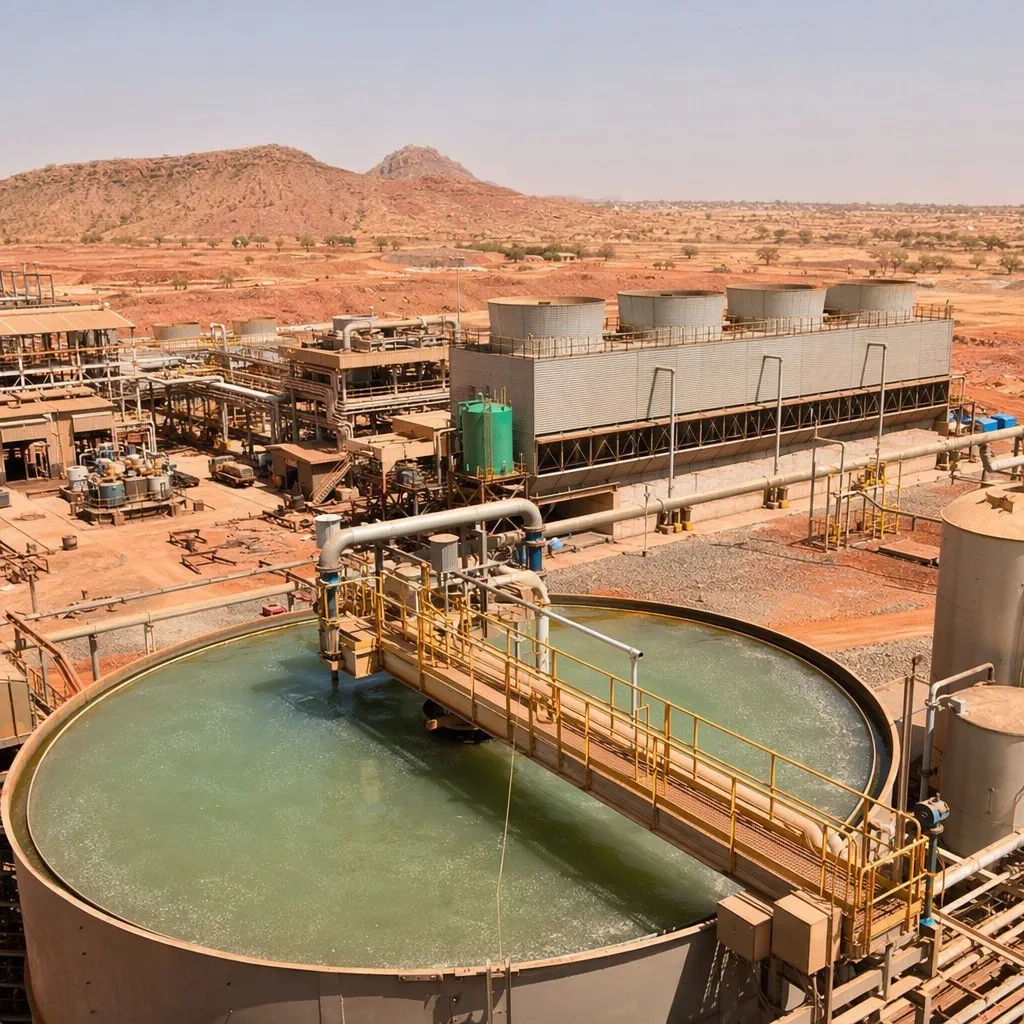
Technical Scenario 2: Reviewing Seasonal Adsorption Performance in a Hot-Climate CIL Circuit
|
Illustrative circuit image; no specific customer or site test data referenced. |
|
Typical Operating Challenge: A seasonal recovery change in a hot-climate operation may coincide with higher slurry temperature, but it can also reflect ore blend, oxygen transfer, cyanide, pH, residence time, evaporation, water chemistry, or carbon condition. Temperature should be tested as one hypothesis rather than declared the cause from calendar data alone. Technical Assessment: Align plant recovery and solution profiles with measured slurry temperature and the other key variables. Conduct laboratory adsorption comparisons at representative site temperatures using the same solution and carbon samples, and review leach and adsorption performance separately. YICARB® Technical Approach: YICARB® can compare appropriate AU Series grades under the agreed laboratory conditions. Cooling, shade, water-spray, agitation, or other process modifications must be evaluated by the mine's qualified engineers for water balance, safety, and process impact before implementation. Verification Before Any Performance Claim: Use a controlled trial that covers representative seasonal conditions and maintains a traceable baseline. Do not publish a temperature-retention percentage, recovery improvement, production gain, or payback unless the underlying tests and site records are available for review. Learn More: For verified site case studies with authorized mine data, contact our technical team to request confidential project references. |
Technical Scenario 2: Reviewing Seasonal Adsorption Performance in a Hot-Climate CIL Circuit
|
Illustrative circuit image; no specific customer or site test data referenced. |
|
Typical Operating Challenge: A seasonal recovery change in a hot-climate operation may coincide with higher slurry temperature, but it can also reflect ore blend, oxygen transfer, cyanide, pH, residence time, evaporation, water chemistry, or carbon condition. Temperature should be tested as one hypothesis rather than declared the cause from calendar data alone. Technical Assessment: Align plant recovery and solution profiles with measured slurry temperature and the other key variables. Conduct laboratory adsorption comparisons at representative site temperatures using the same solution and carbon samples, and review leach and adsorption performance separately. YICARB® Technical Approach: YICARB® can compare appropriate AU Series grades under the agreed laboratory conditions. Cooling, shade, water-spray, agitation, or other process modifications must be evaluated by the mine's qualified engineers for water balance, safety, and process impact before implementation. Verification Before Any Performance Claim: Use a controlled trial that covers representative seasonal conditions and maintains a traceable baseline. Do not publish a temperature-retention percentage, recovery improvement, production gain, or payback unless the underlying tests and site records are available for review. Learn More: For verified site case studies with authorized mine data, contact our technical team to request confidential project references. |
ㅤ

Products
Solutions
Performance
Markets & Cases
Resources
Manufacturing & Quality
About Us
Contact Us

Copyright © 2026 Guangdong Yicarb Activated Carbon Co., Ltd. All Rights Reserved.