
How to Reduce Activated Carbon Loss in Gold Recovery Operations
Practical controls for minimizing fines, screen escape, handling damage, and unnecessary make-up carbon in CIP, CIL, and CIC circuits
Date: October 14, 2026 Author: YICARB Technical Expert (15+ years experience in activated carbon industry)
Abstract
Activated carbon loss in gold recovery operations increases operating cost and can also carry adsorbed gold out of the controlled recovery circuit. Loss can come from attrition, fines generation, screen escape, transfer damage, spillage, and regeneration. Reducing loss therefore requires both mechanically durable carbon and disciplined plant operation. This article explains the main loss pathways and the practical controls that help stabilize carbon inventory without assuming a universal loss rate.
1. Carbon Loss Is More Than a Consumable-Cost Problem
Some carbon make-up is unavoidable, but excessive loss should not be treated as normal. Carbon particles may already contain adsorbed gold when they break down or leave the circuit, so the economic impact can exceed the replacement cost of the carbon itself. The first step is to identify where the loss occurs.
2. Main Paths of Activated Carbon Loss
2.1 Attrition and fines generation
Agitation, particle collision, pumping, transfer, and repeated regeneration wear carbon. Weak grains, soft particles, and platelet-shaped fractions can break down faster and generate fines.
2.2 Screen escape
Undersize particles, worn screens, incorrect apertures, poor sealing, or screen damage can allow carbon to leave the intended circuit.
2.3 Handling and regeneration losses
Excessive pump shear, high drop heights, open transfer points, poor housekeeping, or aggressive regeneration conditions can all increase avoidable loss.
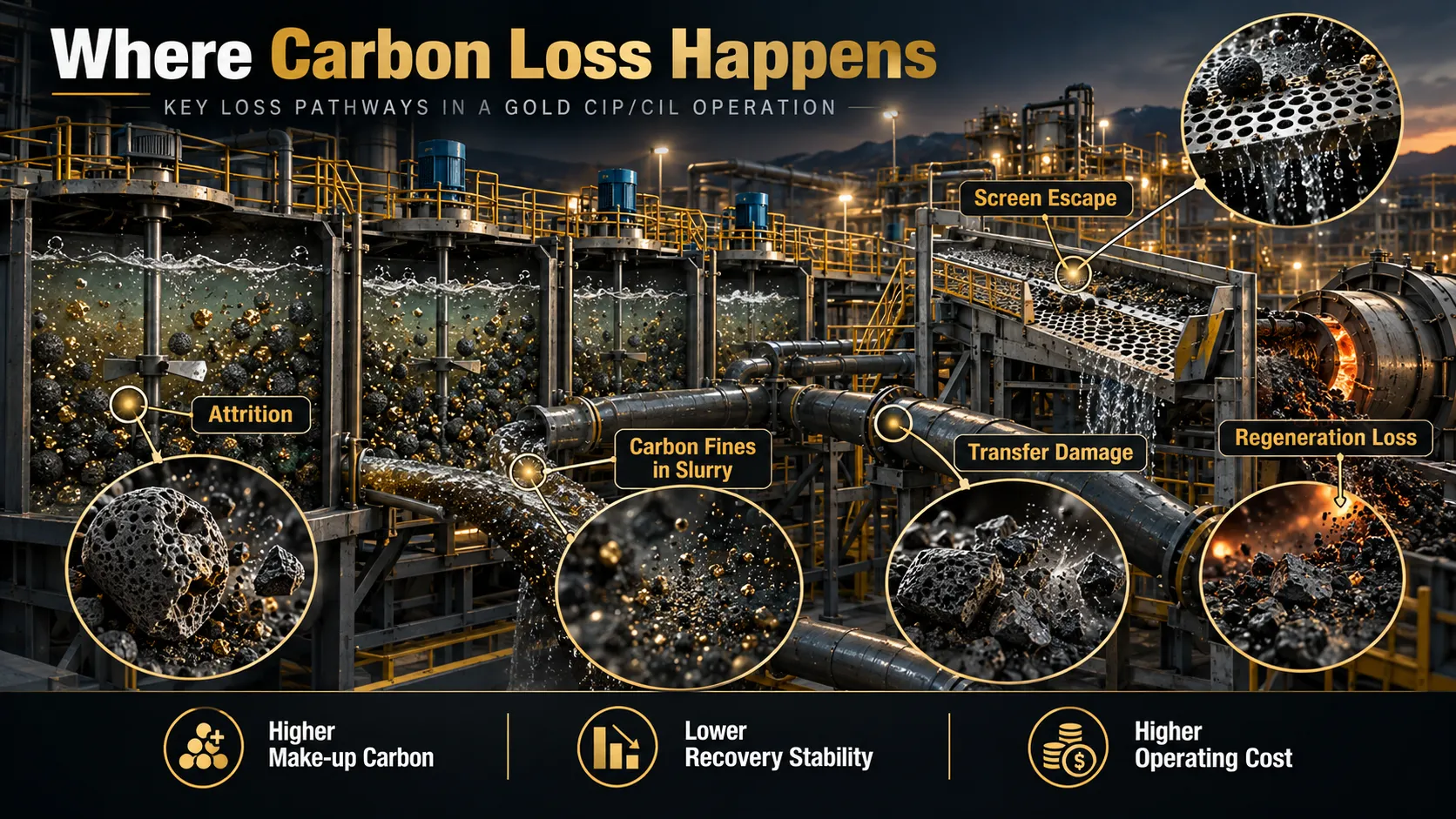 Figure 1: Common carbon-loss pathways in gold-recovery circuits.
3. Use Carbon That Can Survive the Circuit
Gold-recovery carbon should be evaluated for hardness, attrition resistance, particle-size distribution, platelet and soft-particle control, and batch consistency. The highest hardness number is not automatically the best choice; mechanical durability should be balanced with gold loading and adsorption kinetics.
4. Match Particle Size to the Screening System
PSD is one of the most practical loss-control parameters. The carbon should be comfortably retained by installed screens while remaining suitable for adsorption and transfer. Buyers should review the on-size fraction, oversize, undersize, and near-size material, while maintenance teams routinely inspect screen wear and sealing.
5. Reduce Mechanical Stress During Handling
· Avoid unnecessarily high agitation intensity when process conditions do not require it.
· Use transfer methods and pumps that limit particle breakage.
· Reduce excessive drop heights during loading and unloading.
· Keep screens, seals, and carbon-transfer equipment in good condition.
· Remove dust and fines from make-up carbon before it enters the circuit.
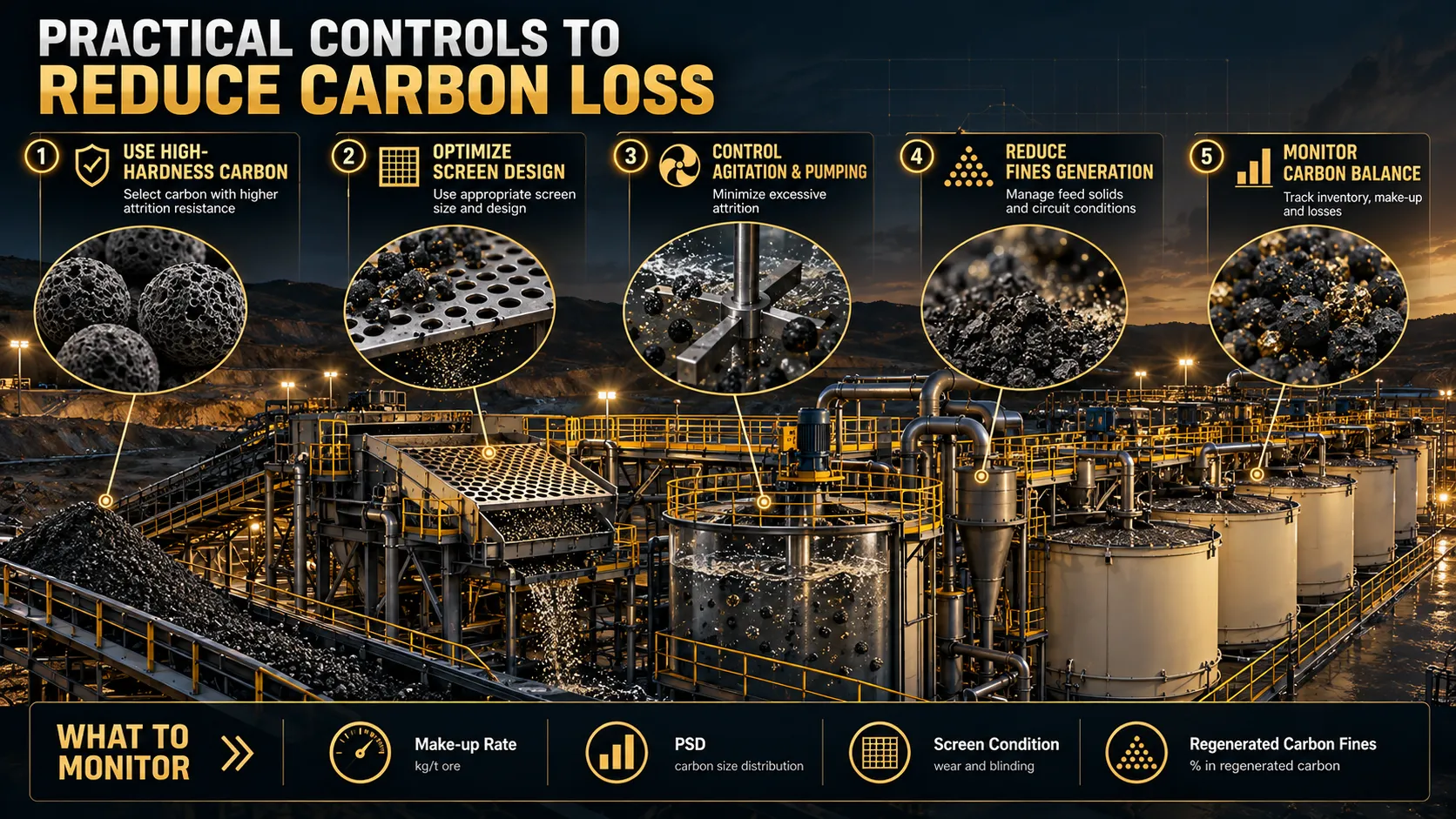 Figure 2: Practical controls for reducing carbon loss.
6. Manage Regeneration as a Loss-Control Step
Regeneration should restore activity without sacrificing particle integrity. Excessive oxidation, overheating, or long exposure can weaken carbon and create fines. After regeneration, screening can remove damaged material before the carbon returns to service.
7. Monitor the Carbon Balance
|
What to Track |
What It Can Reveal |
Typical Follow-Up |
|
Carbon make-up rate |
Overall inventory loss trend |
Check whether loss is rising |
|
Fines in slurry or tails |
Attrition or screen escape |
Inspect handling and screens |
|
Circulating PSD |
Progressive particle breakdown |
Compare fresh and circulating carbon |
|
Screen condition |
Physical retention risk |
Inspect wear, damage, and sealing |
|
Regenerated carbon |
Thermal or handling damage |
Review regeneration and screening |
8. Application Example: Make-Up Increases Without a Change in Ore
Application Example - not a customer case study: A CIP plant sees fresh-carbon make-up rise while ore type and leach chemistry remain stable. The team compares fresh and circulating PSD, checks interstage screens, reviews regenerated-carbon fines, and inspects transfer points. The investigation identifies repeated handling damage and excessive wear in one screen section. Correcting both issues reduces avoidable loss more effectively than simply increasing carbon purchases.
9. YICARB Perspective
YICARB approaches carbon-loss control through the combination of product durability and plant compatibility. The practical objective is not zero loss, which is unrealistic in a circulating system, but to identify abnormal loss, remove avoidable mechanisms, and maintain a stable carbon inventory with predictable make-up.
Conclusion
To reduce activated carbon loss in gold recovery operations, mines need to control both the carbon itself and the way it moves through the plant. Mechanical durability, screen compatibility, careful handling, controlled regeneration, and carbon-balance monitoring all contribute to lower loss, more stable inventory, and reduced risk of losing gold with degraded carbon fines.
Practical controls for minimizing fines, screen escape, handling damage, and unnecessary make-up carbon in CIP, CIL, and CIC circuits
Date: October 14, 2026 Author: YICARB Technical Expert (15+ years experience in activated carbon industry)
Abstract
Activated carbon loss in gold recovery operations increases operating cost and can also carry adsorbed gold out of the controlled recovery circuit. Loss can come from attrition, fines generation, screen escape, transfer damage, spillage, and regeneration. Reducing loss therefore requires both mechanically durable carbon and disciplined plant operation. This article explains the main loss pathways and the practical controls that help stabilize carbon inventory without assuming a universal loss rate.
1. Carbon Loss Is More Than a Consumable-Cost Problem
Some carbon make-up is unavoidable, but excessive loss should not be treated as normal. Carbon particles may already contain adsorbed gold when they break down or leave the circuit, so the economic impact can exceed the replacement cost of the carbon itself. The first step is to identify where the loss occurs.
2. Main Paths of Activated Carbon Loss
2.1 Attrition and fines generation
Agitation, particle collision, pumping, transfer, and repeated regeneration wear carbon. Weak grains, soft particles, and platelet-shaped fractions can break down faster and generate fines.
2.2 Screen escape
Undersize particles, worn screens, incorrect apertures, poor sealing, or screen damage can allow carbon to leave the intended circuit.
2.3 Handling and regeneration losses
Excessive pump shear, high drop heights, open transfer points, poor housekeeping, or aggressive regeneration conditions can all increase avoidable loss.
Figure 1: Common carbon-loss pathways in gold-recovery circuits.
3. Use Carbon That Can Survive the Circuit
Gold-recovery carbon should be evaluated for hardness, attrition resistance, particle-size distribution, platelet and soft-particle control, and batch consistency. The highest hardness number is not automatically the best choice; mechanical durability should be balanced with gold loading and adsorption kinetics.
4. Match Particle Size to the Screening System
PSD is one of the most practical loss-control parameters. The carbon should be comfortably retained by installed screens while remaining suitable for adsorption and transfer. Buyers should review the on-size fraction, oversize, undersize, and near-size material, while maintenance teams routinely inspect screen wear and sealing.
5. Reduce Mechanical Stress During Handling
· Avoid unnecessarily high agitation intensity when process conditions do not require it.
· Use transfer methods and pumps that limit particle breakage.
· Reduce excessive drop heights during loading and unloading.
· Keep screens, seals, and carbon-transfer equipment in good condition.
· Remove dust and fines from make-up carbon before it enters the circuit.
Figure 2: Practical controls for reducing carbon loss.
6. Manage Regeneration as a Loss-Control Step
Regeneration should restore activity without sacrificing particle integrity. Excessive oxidation, overheating, or long exposure can weaken carbon and create fines. After regeneration, screening can remove damaged material before the carbon returns to service.
7. Monitor the Carbon Balance
|
What to Track |
What It Can Reveal |
Typical Follow-Up |
|
Carbon make-up rate |
Overall inventory loss trend |
Check whether loss is rising |
|
Fines in slurry or tails |
Attrition or screen escape |
Inspect handling and screens |
|
Circulating PSD |
Progressive particle breakdown |
Compare fresh and circulating carbon |
|
Screen condition |
Physical retention risk |
Inspect wear, damage, and sealing |
|
Regenerated carbon |
Thermal or handling damage |
Review regeneration and screening |
8. Application Example: Make-Up Increases Without a Change in Ore
Application Example - not a customer case study: A CIP plant sees fresh-carbon make-up rise while ore type and leach chemistry remain stable. The team compares fresh and circulating PSD, checks interstage screens, reviews regenerated-carbon fines, and inspects transfer points. The investigation identifies repeated handling damage and excessive wear in one screen section. Correcting both issues reduces avoidable loss more effectively than simply increasing carbon purchases.
9. YICARB Perspective
YICARB approaches carbon-loss control through the combination of product durability and plant compatibility. The practical objective is not zero loss, which is unrealistic in a circulating system, but to identify abnormal loss, remove avoidable mechanisms, and maintain a stable carbon inventory with predictable make-up.
Conclusion
To reduce activated carbon loss in gold recovery operations, mines need to control both the carbon itself and the way it moves through the plant. Mechanical durability, screen compatibility, careful handling, controlled regeneration, and carbon-balance monitoring all contribute to lower loss, more stable inventory, and reduced risk of losing gold with degraded carbon fines.
Previous: This is the first one.

Products
Solutions
Performance
Markets & Cases
Resources
Manufacturing & Quality
About Us
Contact Us

Copyright © 2026 Guangdong Yicarb Activated Carbon Co., Ltd. All Rights Reserved.