
How Activated Carbon Improves Gold Recovery Efficiency in CIL Plants
Why adsorption speed, carbon activity, inventory control, and mechanical durability matter in a Carbon-in-Leach circuit
Date: August 17, 2026 Author: YICARB Technical Expert (15+ years experience in activated carbon industry)
Abstract
Gold recovery efficiency in CIL plants depends on how effectively dissolved gold is captured before the slurry leaves the adsorption circuit. In Carbon-in-Leach (CIL), leaching and carbon adsorption occur in the same series of tanks, so activated carbon must respond quickly while the gold is being dissolved. Its contribution is not limited to adsorption capacity: carbon activity, loading behavior, inventory, particle integrity, screen retention, and regeneration stability all influence how much dissolved gold remains in solution and how consistently the plant operates. This technical brief focuses on the specific ways activated carbon supports CIL efficiency and the operating signals that should be monitored.
1. Why Activated Carbon Matters More in CIL Than a Simple Adsorbent
In a CIL circuit, activated carbon is present while cyanide leaching is still taking place. As gold dissolves from the ore, the resulting gold-cyanide complex becomes available for adsorption almost immediately. This simultaneous contact gives the carbon a direct role in controlling dissolved-gold concentration throughout the leach-and-adsorption train.
A well-performing carbon therefore does more than carry gold to elution. It helps the plant keep soluble gold low in the later stages, maintains a useful loading gradient across the circuit, and provides a stable mobile phase for transporting gold out of the slurry.
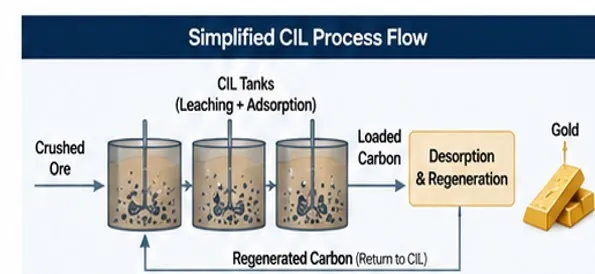 Figure 1: Simplified CIL leaching and adsorption flow.
2. Four Ways Activated Carbon Improves CIL Recovery Efficiency
2.1 Fast capture of dissolved gold
CIL residence time is finite. Gold that dissolves must be adsorbed quickly enough to avoid remaining in solution as slurry advances through the circuit. Adsorption kinetics therefore matter directly. A carbon with strong gold-specific rate behavior can capture dissolved gold more rapidly under the same plant residence time.
2.2 Useful gold loading capacity
Fast adsorption alone is not sufficient. The carbon also needs enough working capacity to carry a practical gold inventory before it is removed for elution. Gold loading capacity and adsorption rate should be evaluated together rather than inferred from iodine value or CTC alone.
2.3 Low carbon loss means lower gold-bearing fines loss
Carbon in CIL tanks experiences continuous agitation, transfer, screening, elution, and regeneration. Weak particles can generate fines during this cycle. Because those fines may already contain adsorbed gold, mechanical durability affects more than carbon consumption. Hardness, attrition resistance, and control of weak or platelet particles help keep gold-bearing carbon inside the intended circuit.
2.4 Stable regenerated carbon protects long-term performance
CIL carbon is reused repeatedly. After elution, regeneration should restore enough adsorption activity for the carbon to return to service effectively. If regenerated carbon gradually loses activity or particle integrity, soluble-gold levels can rise even when the original make-up carbon met specification.
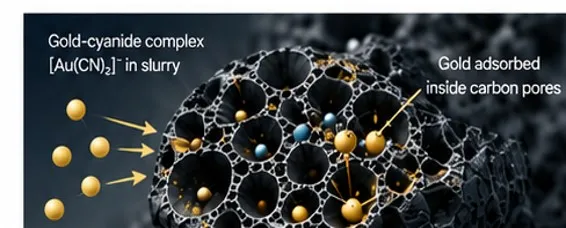 Figure 2: Gold-cyanide adsorption on activated carbon.
3. Carbon Performance Must Be Managed as a Circuit Variable
Even a technically strong carbon can underperform when the circuit does not maintain the right carbon inventory, transfer pattern, or activity. For this reason, CIL efficiency should be evaluated through both carbon properties and plant operating data.
|
What to Monitor |
Why It Matters |
What a Change May Indicate |
|
Solution gold by stage |
Shows how effectively dissolved gold is being removed |
Slow adsorption, low carbon inventory, or reduced carbon activity |
|
Gold loading on carbon |
Shows whether carbon is building a useful loading profile |
Transfer imbalance, weak loading capacity, or altered solution conditions |
|
Carbon concentration |
Determines available adsorption inventory |
Carbon loss, incorrect transfer, or insufficient make-up |
|
Carbon fines |
Indicates mechanical breakdown |
Attrition, weak particles, or harsh handling |
|
Regenerated carbon activity |
Confirms carbon is returning in usable condition |
Incomplete regeneration, fouling, or cumulative degradation |
4. The Most Important Carbon Properties for CIL
For CIL service, the most useful product evaluation combines gold-specific adsorption performance with physical durability. K-Value can be used to evaluate gold loading behavior under a defined test method, while R-Value or other rate-based testing can help compare adsorption kinetics. These should be considered alongside hardness, attrition resistance, particle size distribution, and regeneration stability.
Iodine value and CTC remain useful quality indicators, but neither should be treated as a direct substitute for gold-specific adsorption data. Two carbons with similar general adsorption numbers can behave differently in a CIL circuit because gold adsorption kinetics, pore accessibility, mechanical strength, and particle-size control are different.
5. Application Example: When Tail-End Solution Gold Begins to Rise
Application Example - not a customer case study: A CIL plant observes a gradual increase in soluble gold in the final adsorption stages while head grade and leach chemistry remain relatively stable. The first response should not be to assume that a higher iodine-value carbon is required.
A more useful review compares carbon concentration by stage, gold loading on carbon, fines generation, screen retention, and the activity of regenerated carbon. If the tail-end inventory is low and regenerated carbon is returning with weaker adsorption activity, restoring inventory and correcting the regeneration cycle may improve performance more effectively than changing a single product specification.
This example shows how activated carbon improves gold recovery efficiency in CIL plants only when product performance and circuit management work together.
6. YICARB Perspective: Optimize the Carbon Cycle, Not One Number
YICARB evaluates CIL activated carbon as part of a complete operating cycle: fresh carbon enters the plant, adsorbs gold, moves through slurry, is screened and transferred, carries gold to elution, passes through regeneration, and returns to adsorption. The carbon must remain useful through that entire cycle.
For mining operations, this means supplier evaluation should focus on consistent gold-specific performance, controlled particle size, low weak-particle content, mechanical durability, and repeatable quality from batch to batch - not on one headline value alone.
Conclusion
Activated carbon improves CIL performance by capturing dissolved gold quickly, carrying a useful gold loading, remaining physically intact through repeated handling, and returning from regeneration with sufficient activity for reuse. The result is a more stable adsorption circuit with better control of soluble gold and lower risk of losing gold through weak carbon or poorly managed inventory.
Improving gold recovery efficiency in CIL plants therefore requires both the right activated carbon and the right carbon-management strategy. When adsorption kinetics, loading capacity, mechanical durability, carbon inventory, screen retention, and regeneration are managed together, activated carbon in CIL gold recovery can support more consistent recovery performance without relying on any single specification as the answer.
Why adsorption speed, carbon activity, inventory control, and mechanical durability matter in a Carbon-in-Leach circuit
Date: August 17, 2026 Author: YICARB Technical Expert (15+ years experience in activated carbon industry)
Abstract
Gold recovery efficiency in CIL plants depends on how effectively dissolved gold is captured before the slurry leaves the adsorption circuit. In Carbon-in-Leach (CIL), leaching and carbon adsorption occur in the same series of tanks, so activated carbon must respond quickly while the gold is being dissolved. Its contribution is not limited to adsorption capacity: carbon activity, loading behavior, inventory, particle integrity, screen retention, and regeneration stability all influence how much dissolved gold remains in solution and how consistently the plant operates. This technical brief focuses on the specific ways activated carbon supports CIL efficiency and the operating signals that should be monitored.
1. Why Activated Carbon Matters More in CIL Than a Simple Adsorbent
In a CIL circuit, activated carbon is present while cyanide leaching is still taking place. As gold dissolves from the ore, the resulting gold-cyanide complex becomes available for adsorption almost immediately. This simultaneous contact gives the carbon a direct role in controlling dissolved-gold concentration throughout the leach-and-adsorption train.
A well-performing carbon therefore does more than carry gold to elution. It helps the plant keep soluble gold low in the later stages, maintains a useful loading gradient across the circuit, and provides a stable mobile phase for transporting gold out of the slurry.
Figure 1: Simplified CIL leaching and adsorption flow.
2. Four Ways Activated Carbon Improves CIL Recovery Efficiency
2.1 Fast capture of dissolved gold
CIL residence time is finite. Gold that dissolves must be adsorbed quickly enough to avoid remaining in solution as slurry advances through the circuit. Adsorption kinetics therefore matter directly. A carbon with strong gold-specific rate behavior can capture dissolved gold more rapidly under the same plant residence time.
2.2 Useful gold loading capacity
Fast adsorption alone is not sufficient. The carbon also needs enough working capacity to carry a practical gold inventory before it is removed for elution. Gold loading capacity and adsorption rate should be evaluated together rather than inferred from iodine value or CTC alone.
2.3 Low carbon loss means lower gold-bearing fines loss
Carbon in CIL tanks experiences continuous agitation, transfer, screening, elution, and regeneration. Weak particles can generate fines during this cycle. Because those fines may already contain adsorbed gold, mechanical durability affects more than carbon consumption. Hardness, attrition resistance, and control of weak or platelet particles help keep gold-bearing carbon inside the intended circuit.
2.4 Stable regenerated carbon protects long-term performance
CIL carbon is reused repeatedly. After elution, regeneration should restore enough adsorption activity for the carbon to return to service effectively. If regenerated carbon gradually loses activity or particle integrity, soluble-gold levels can rise even when the original make-up carbon met specification.
Figure 2: Gold-cyanide adsorption on activated carbon.
3. Carbon Performance Must Be Managed as a Circuit Variable
Even a technically strong carbon can underperform when the circuit does not maintain the right carbon inventory, transfer pattern, or activity. For this reason, CIL efficiency should be evaluated through both carbon properties and plant operating data.
|
What to Monitor |
Why It Matters |
What a Change May Indicate |
|
Solution gold by stage |
Shows how effectively dissolved gold is being removed |
Slow adsorption, low carbon inventory, or reduced carbon activity |
|
Gold loading on carbon |
Shows whether carbon is building a useful loading profile |
Transfer imbalance, weak loading capacity, or altered solution conditions |
|
Carbon concentration |
Determines available adsorption inventory |
Carbon loss, incorrect transfer, or insufficient make-up |
|
Carbon fines |
Indicates mechanical breakdown |
Attrition, weak particles, or harsh handling |
|
Regenerated carbon activity |
Confirms carbon is returning in usable condition |
Incomplete regeneration, fouling, or cumulative degradation |
4. The Most Important Carbon Properties for CIL
For CIL service, the most useful product evaluation combines gold-specific adsorption performance with physical durability. K-Value can be used to evaluate gold loading behavior under a defined test method, while R-Value or other rate-based testing can help compare adsorption kinetics. These should be considered alongside hardness, attrition resistance, particle size distribution, and regeneration stability.
Iodine value and CTC remain useful quality indicators, but neither should be treated as a direct substitute for gold-specific adsorption data. Two carbons with similar general adsorption numbers can behave differently in a CIL circuit because gold adsorption kinetics, pore accessibility, mechanical strength, and particle-size control are different.
5. Application Example: When Tail-End Solution Gold Begins to Rise
Application Example - not a customer case study: A CIL plant observes a gradual increase in soluble gold in the final adsorption stages while head grade and leach chemistry remain relatively stable. The first response should not be to assume that a higher iodine-value carbon is required.
A more useful review compares carbon concentration by stage, gold loading on carbon, fines generation, screen retention, and the activity of regenerated carbon. If the tail-end inventory is low and regenerated carbon is returning with weaker adsorption activity, restoring inventory and correcting the regeneration cycle may improve performance more effectively than changing a single product specification.
This example shows how activated carbon improves gold recovery efficiency in CIL plants only when product performance and circuit management work together.
6. YICARB Perspective: Optimize the Carbon Cycle, Not One Number
YICARB evaluates CIL activated carbon as part of a complete operating cycle: fresh carbon enters the plant, adsorbs gold, moves through slurry, is screened and transferred, carries gold to elution, passes through regeneration, and returns to adsorption. The carbon must remain useful through that entire cycle.
For mining operations, this means supplier evaluation should focus on consistent gold-specific performance, controlled particle size, low weak-particle content, mechanical durability, and repeatable quality from batch to batch - not on one headline value alone.
Conclusion
Activated carbon improves CIL performance by capturing dissolved gold quickly, carrying a useful gold loading, remaining physically intact through repeated handling, and returning from regeneration with sufficient activity for reuse. The result is a more stable adsorption circuit with better control of soluble gold and lower risk of losing gold through weak carbon or poorly managed inventory.
Improving gold recovery efficiency in CIL plants therefore requires both the right activated carbon and the right carbon-management strategy. When adsorption kinetics, loading capacity, mechanical durability, carbon inventory, screen retention, and regeneration are managed together, activated carbon in CIL gold recovery can support more consistent recovery performance without relying on any single specification as the answer.

Products
Solutions
Performance
Markets & Cases
Resources
Manufacturing & Quality
About Us
Contact Us

Copyright © 2026 Guangdong Yicarb Activated Carbon Co., Ltd. All Rights Reserved.