Gold Adsorption Kinetics of Activated Carbon: What Buyers Should Compare
Why adsorption rate and equilibrium loading are different - and why particle size, solution chemistry, test time, and site validation must be controlled before products are compared
Author: YICARB Technical Expert (15+ years experience in activated carbon industry)
Introduction
Gold of activated carbon describe how quickly dissolved gold is transferred from solution onto carbon under defined conditions. For buyers, this must be separated from equilibrium loading capacity, which describes how much gold the carbon can hold after sufficient contact under the chosen test conditions. A carbon can adsorb gold quickly during the initial stage without having the highest final loading, while another product may load more gold at equilibrium but require more time to approach that capacity. Comparing products therefore requires the same particle size, solution chemistry, carbon dosage, mixing, temperature, and contact-time schedule.
1. Adsorption Rate Is Not the Same as Equilibrium Loading
A kinetic test follows gold uptake as a function of time. The early part of the loading curve reflects how rapidly the carbon responds; later points show whether loading continues toward a plateau. An equilibrium or near-equilibrium test focuses on the final loading reached after sufficient contact. These two results answer different purchasing questions.
| Buyer question | Kinetic result | Equilibrium / capacity result |
| What does it tell me? | How fast the carbon captures gold under the test conditions | How much gold the carbon can hold after sufficient contact |
| Why it matters | Important when stage residence time is limited or tail solution must be polished quickly | Important for carbon inventory, loading strategy and overall utilization |
| Main risk if used alone | Fast initial uptake may be mistaken for high ultimate capacity | High final loading may hide slow uptake under actual circuit residence time |
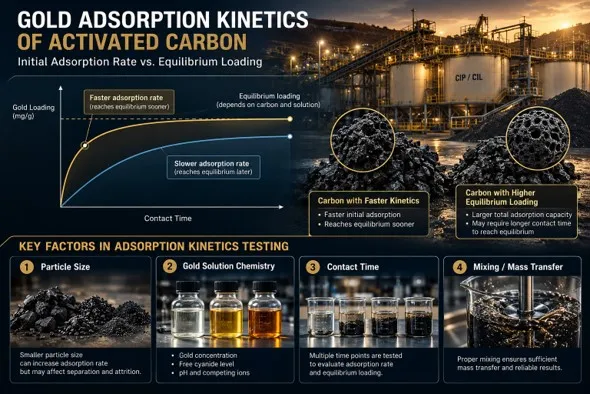
Figure 1: Adsorption rate and equilibrium loading describe different aspects of carbon performance.
2. Particle Size Must Be Controlled Before Comparing Kinetics
Particle size changes the diffusion distance between the particle surface and internal adsorption sites. Finer particles can show faster apparent kinetics because the mass-transfer path is shorter, but particle size also affects screening, attrition, pressure drop, and carbon retention in plant service.
ASTM D2862-16(2022) specifically notes that changes in granular activated-carbon particle-size distribution can affect adsorption rate as well as packed-bed pressure drop. [1] This means a buyer should not compare the kinetic result of one carbon tested as a fine fraction with another carbon tested at a coarser plant-size fraction.
A 2023 open-access study on micrometric activated-carbon particles also reported increasing gold adsorption as particle size decreased, while emphasizing the economic risk of losing fine gold-loaded carbon. [2] Those micrometric test sizes are not a direct substitute for normal plant GAC grades, but the study illustrates why particle size must be held constant when interpreting adsorption rate.
3. Solution Conditions Can Change Both Rate and Loading
Gold adsorption does not occur in a chemically neutral system. Gold concentration, free cyanide, pH, temperature, ionic strength, competing species, and the condition of the process solution can change adsorption behavior. Agitation also changes external mass transfer in a laboratory bottle test.
For example, a published 2017 study of coconut-shell activated carbon examined pH, agitation rate, carbon concentration, and adsorption time, and reported one optimized laboratory condition at pH 11, 40 rpm, 1.25 g/L carbon, and 3 hours. [3] Those numbers belong to that study and should not be transferred directly to a mine specification. Their value is to demonstrate that the measured kinetic result depends strongly on the chosen test conditions.
Classic work on gold distribution inside activated-carbon particles also found that both film mass transfer and intraparticle diffusion contribute to the adsorption process. [4] This is another reason mixing conditions and particle structure should be controlled when products are compared.
4. Test Time Must Show the Shape of the Loading Curve
A single end-point measurement can hide important differences. If two carbons are tested only after a long contact time, they may appear similar even though one reached most of its loading much earlier. If they are tested only at an early time point, the faster carbon may appear superior even though the other eventually reaches a higher equilibrium loading.
A more useful kinetic test collects several time points under the same conditions. Buyers should compare the early adsorption response, the rate at which loading slows, and the final or near-equilibrium loading. The exact sampling schedule should reflect the purpose of the test and the expected residence time of the real process.
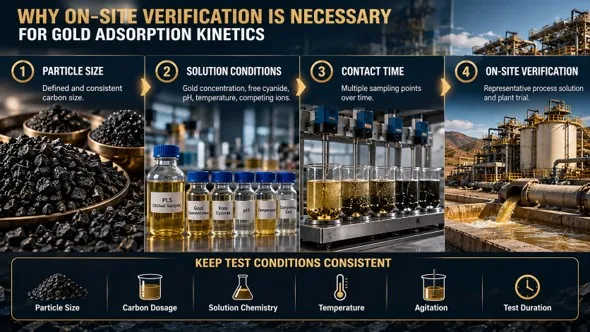
Figure 2: Keep particle size, solution conditions, and test procedure consistent before validating performance on site.
5. Do Not Use Iodine Number as a Gold-Kinetics Substitute
Iodine number remains useful as a general activated-carbon quality parameter, but it is not a direct gold-adsorption-rate test. ASTM D4607 states that iodine number is a relative indicator of porosity and does not necessarily measure a carbon's ability to adsorb other species. [5]
For gold-recovery purchasing, this means iodine value can support quality-control discussions, but buyers should request gold-specific rate and loading data when kinetics matter.
6. What Buyers Should Ask to See in a Kinetics Comparison
· The exact carbon particle size or sieve fraction used for every product.
· Initial gold concentration and the type of gold-bearing solution used - synthetic solution, plant PLS, or process slurry filtrate.
· Free cyanide, pH, temperature, and any relevant competing ions or dissolved species.
· Carbon dosage or solution-to-carbon ratio.
· Agitation or mixing conditions and vessel geometry.
· Multiple contact-time points, not only one final measurement.
· Both adsorption-rate behavior and final / near-equilibrium loading.
· The test method, sample preparation, replicate practice, and basis used to calculate gold loading.
7. Why On-Site Testing Is Necessary
A laboratory comparison is useful because it can isolate product differences under controlled conditions. It cannot fully reproduce the mine. Real process solutions can contain different gold concentrations, free cyanide levels, dissolved salts, competing metal-cyanide species, organics, and fines. CIP, CIL, and CIC circuits also impose different contact patterns and mechanical conditions.
For this reason, the best laboratory carbon should be treated as a candidate rather than a guaranteed plant winner. A controlled site trial can verify whether faster laboratory kinetics translate into lower soluble-gold losses, stable carbon loading, acceptable carbon loss, and consistent performance through elution and regeneration.
8. Application Example
Illustrative example - not a customer case study: A buyer receives two supplier reports. Carbon A reaches a high gold loading after a long equilibrium test. Carbon B shows faster uptake during the first part of a shorter kinetic test. Because the suppliers used different particle sizes and solution conditions, the reports cannot support a fair product decision. The buyer repeats the comparison using the same plant-size fraction, the same process solution, identical carbon dosage, mixing and temperature, and several common time points. Only after that controlled comparison does the adsorption-rate difference become meaningful.
YICARB Perspective
YICARB recommends treating gold adsorption kinetics as a controlled comparative test, not as a headline number. Buyers should ask how the carbon was prepared, what solution was used, how long the test ran, and whether the reported rate and equilibrium loading were measured under directly comparable conditions.
Conclusion
Gold adsorption kinetics of activated carbon should be compared separately from equilibrium loading capacity. Particle size, solution chemistry, carbon dosage, mixing, temperature, and contact time can all change the result. A credible buyer comparison therefore standardizes the laboratory conditions first, evaluates both rate and loading, and then verifies the preferred carbon with representative plant solution or an on-site trial.
Public Standards and Technical References
[1] ASTM D2862-16(2022). Standard Test Method for Particle Size Distribution of Granular Activated Carbon. ASTM notes that particle-size distribution can affect adsorption rate and pressure drop.
[2] Thermodynamic and Kinetic Aspects of Gold Adsorption in Micrometric Activated Carbon and the Impact of Their Loss in Adsorption, Desorption, and Reactivation Plants. Minerals, 2023. Open-access article; demonstrates particle-size effects on gold adsorption and the importance of fine-carbon recovery.
[3] Khosravi, R. et al. Adsorption of gold from cyanide leaching solution onto activated carbon originating from coconut shell - Optimization, kinetics and equilibrium studies. Journal of Industrial and Engineering Chemistry, 2017.
[4] The distribution of gold in activated carbon during adsorption from cyanide solutions. Hydrometallurgy, 1992. Reports mixed control involving solution-film transfer and intraparticle diffusion.
[5] ASTM D4607-14(2021). Standard Test Method for Determination of Iodine Number of Activated Carbon. Iodine number is a relative porosity indicator and is not a direct measure of adsorption of other species.

Products
Solutions
Performance
Markets & Cases
Resources
Manufacturing & Quality
About Us
Contact Us

Copyright © 2026 Guangdong Yicarb Activated Carbon Co., Ltd. All Rights Reserved.