
Kenya
Technical Scenario 1: Cost-Effective Activated Carbon Selection for an Emerging Kenyan Gold Project
|
Illustrative circuit image; no specific customer or site test data referenced. |
|
Typical Operating Challenge: A new operation needs a carbon specification that is technically adequate, available, and affordable. A generic mesh description without defined activity, mechanical, particle-size, ash, density, moisture, and quality-documentation requirements can create avoidable uncertainty during commissioning. Technical Assessment: Translate the ore test work and flowsheet into a minimum product specification and receiving plan. Confirm screen compatibility, planned carbon inventory and movement, elution and regeneration route, water and solution conditions, delivery schedule, storage, and the site's ability to sample and test carbon. YICARB® Technical Approach: YICARB® would compare AU45, AU50, AU55, and AU60 and recommend the lowest grade that meets the documented process requirement. The supply proposal should define the certificate of analysis, batch traceability, packaging, startup handling guidance, and trial or acceptance criteria. Verification Before Any Performance Claim: Commissioning performance must be evaluated from the mine's approved mass balance and consumables records. Do not claim a startup recovery, first-year budget result, fixed-price protection, onsite service, or customer endorsement unless each item is documented and authorized. Learn More: For verified site case studies with authorized mine data, contact our technical team to request confidential project references. |
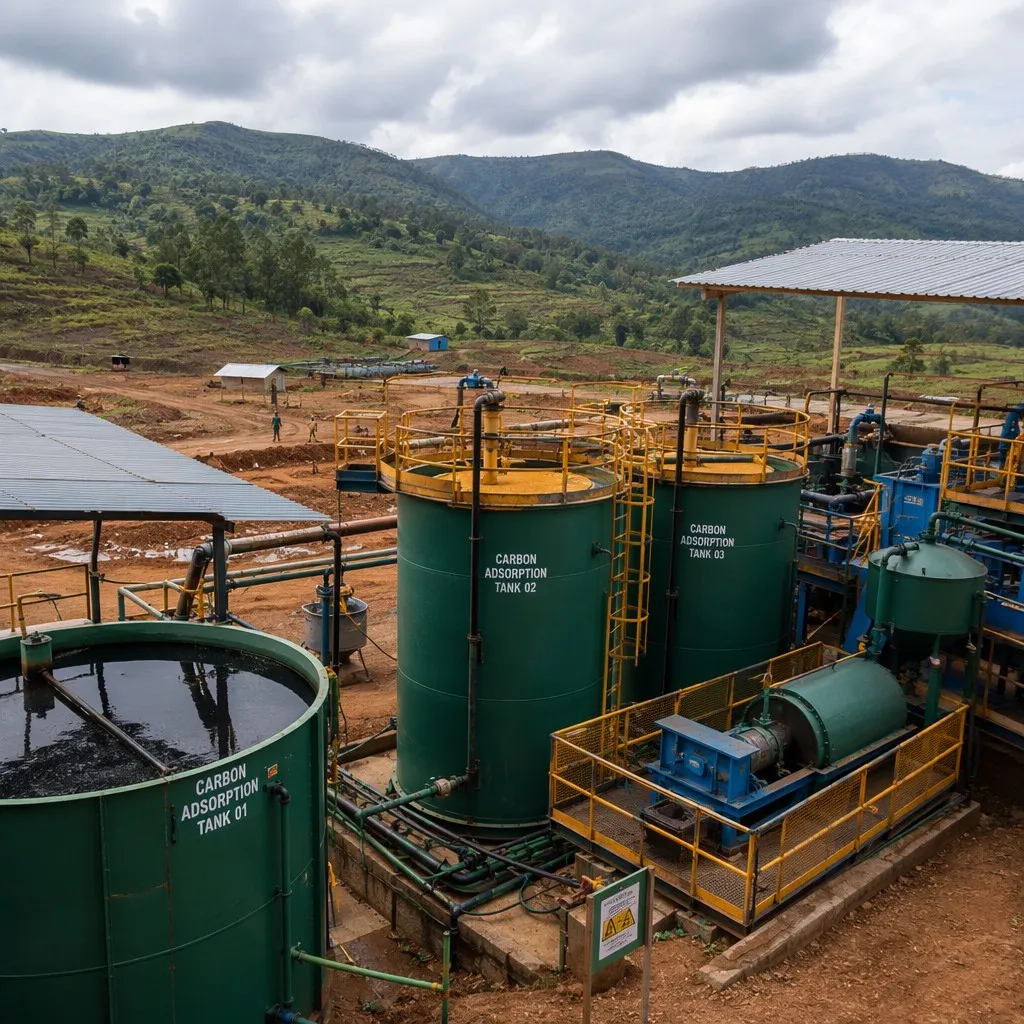
Technical Scenario 1: Cost-Effective Activated Carbon Selection for an Emerging Kenyan Gold Project
|
Illustrative circuit image; no specific customer or site test data referenced. |
|
Typical Operating Challenge: A new operation needs a carbon specification that is technically adequate, available, and affordable. A generic mesh description without defined activity, mechanical, particle-size, ash, density, moisture, and quality-documentation requirements can create avoidable uncertainty during commissioning. Technical Assessment: Translate the ore test work and flowsheet into a minimum product specification and receiving plan. Confirm screen compatibility, planned carbon inventory and movement, elution and regeneration route, water and solution conditions, delivery schedule, storage, and the site's ability to sample and test carbon. YICARB® Technical Approach: YICARB® would compare AU45, AU50, AU55, and AU60 and recommend the lowest grade that meets the documented process requirement. The supply proposal should define the certificate of analysis, batch traceability, packaging, startup handling guidance, and trial or acceptance criteria. Verification Before Any Performance Claim: Commissioning performance must be evaluated from the mine's approved mass balance and consumables records. Do not claim a startup recovery, first-year budget result, fixed-price protection, onsite service, or customer endorsement unless each item is documented and authorized. Learn More: For verified site case studies with authorized mine data, contact our technical team to request confidential project references. |
Technical Scenario 2: A Data-Led Review of Carbon Regeneration Kiln Performance in Kenya
|
Illustrative circuit image; no specific customer or site test data referenced. |
|
Typical Operating Challenge: Declining regenerated-carbon performance may result from feed variability, residual moisture, incomplete elution or acid washing, fouling, kiln temperature profile, residence time, atmosphere, steam, feed stability, or thermal damage. Raising temperature without diagnosis can damage carbon or create equipment and safety risks. Technical Assessment: Sample carbon before and after each relevant step and compare activity, adsorption behavior, particle-size distribution, hardness, ash, and other site-approved indicators. Review calibrated temperature data, residence time, feed rate, moisture, atmosphere, steam, fuel use, and equipment condition with the mine and kiln supplier. YICARB® Technical Approach: YICARB® can support the carbon testing plan and compare regeneration stability across appropriate AU Series grades. Any kiln modification or operating change must be developed and authorized by qualified site and equipment specialists, with process-safety review and controlled change management. Verification Before Any Performance Claim: Change variables systematically and confirm repeatability across documented cycles. Do not publish new setpoints, activity recovery, carbon savings, fuel savings, return ratio, or customer quotations unless the mine's records and written authorization support them. Learn More: For verified site case studies with authorized mine data, contact our technical team to request confidential project references. |
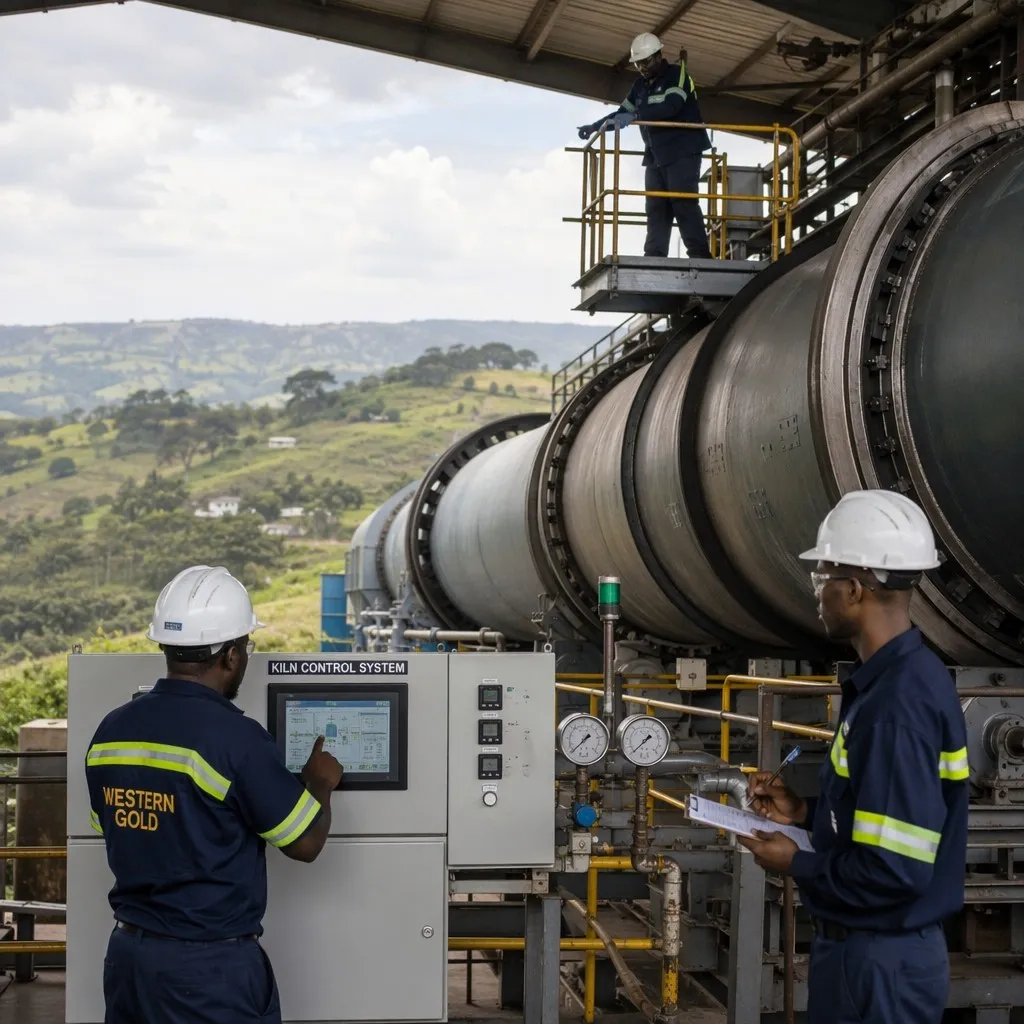
Technical Scenario 2: A Data-Led Review of Carbon Regeneration Kiln Performance in Kenya
|
Illustrative circuit image; no specific customer or site test data referenced. |
|
Typical Operating Challenge: Declining regenerated-carbon performance may result from feed variability, residual moisture, incomplete elution or acid washing, fouling, kiln temperature profile, residence time, atmosphere, steam, feed stability, or thermal damage. Raising temperature without diagnosis can damage carbon or create equipment and safety risks. Technical Assessment: Sample carbon before and after each relevant step and compare activity, adsorption behavior, particle-size distribution, hardness, ash, and other site-approved indicators. Review calibrated temperature data, residence time, feed rate, moisture, atmosphere, steam, fuel use, and equipment condition with the mine and kiln supplier. YICARB® Technical Approach: YICARB® can support the carbon testing plan and compare regeneration stability across appropriate AU Series grades. Any kiln modification or operating change must be developed and authorized by qualified site and equipment specialists, with process-safety review and controlled change management. Verification Before Any Performance Claim: Change variables systematically and confirm repeatability across documented cycles. Do not publish new setpoints, activity recovery, carbon savings, fuel savings, return ratio, or customer quotations unless the mine's records and written authorization support them. Learn More: For verified site case studies with authorized mine data, contact our technical team to request confidential project references. |
ㅤ

Products
Solutions
Performance
Markets & Cases
Resources
Manufacturing & Quality
About Us
Contact Us

Copyright © 2026 Guangdong Yicarb Activated Carbon Co., Ltd. All Rights Reserved.