Startup Gold Mining 101: Achieving 98%+ Gold Recovery with Low-Cost Activated Carbon Solutions
Engineering Maximum Yield on a Junior Miner’s Budget through Strategic Carbon Selection
Date: July 14th, 2026
Author: Yicarb Technical Expert (15+ years experience in activated carbon industry)
Note: The examples presented in this article are illustrative scenarios based on common challenges in gold recovery operations. They are intended to demonstrate technical considerations and potential outcomes under specific operating conditions. Actual performance may vary depending on ore characteristics, process parameters and operational factors.
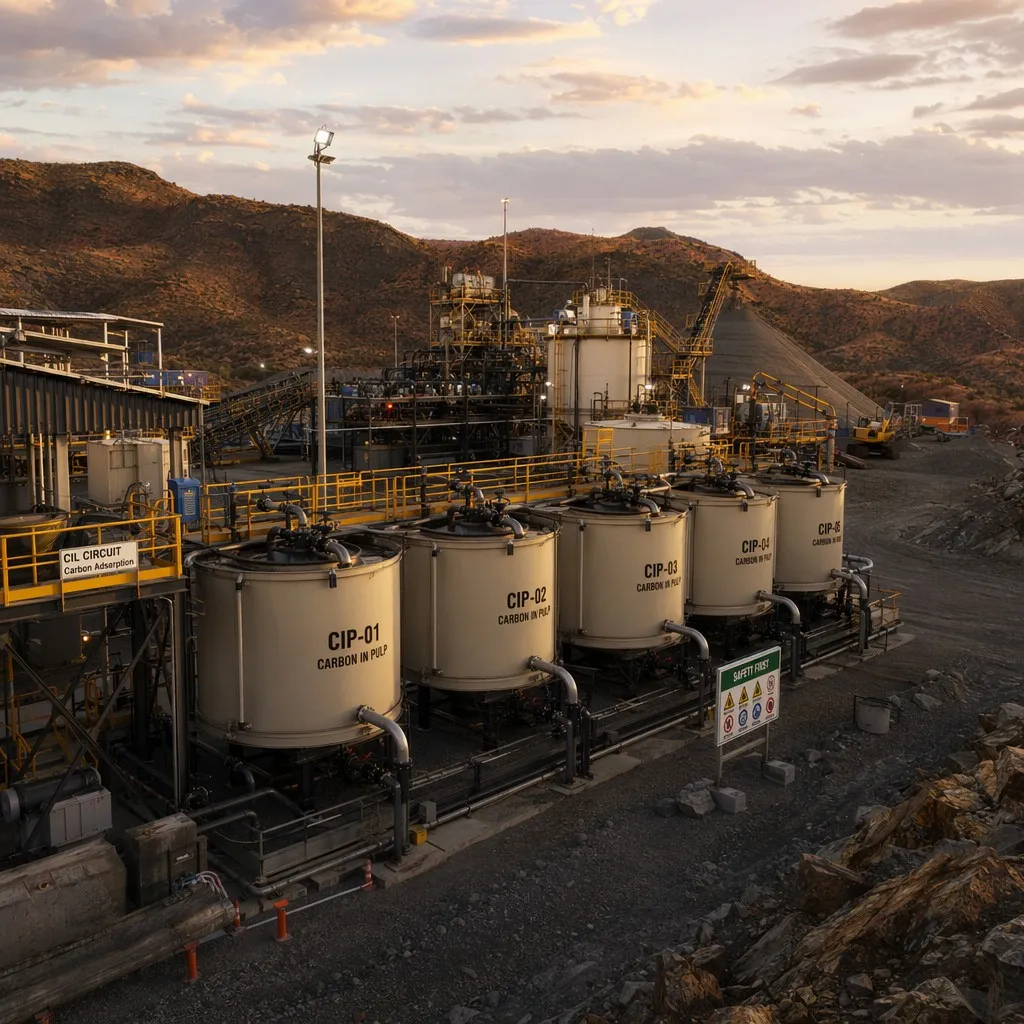
Figure 1: Industrial visualization of a startup-scale CIP/CIL gold recovery plant with multi-stage carbon adsorption circuit.
Abstract: For junior gold miners operating on tight capital budgets, the selection of activated carbon can mean the difference between a profitable operation and a failed venture. Many startups default to the cheapest carbon supplier, unaware that inferior media leads to gold losses through tailings, excessive attrition fines, and unnecessary downtime. This technical brief provides a practical engineering framework for startup mines to achieve 98%+ gold recovery by selecting the right carbon for their specific ore profile and circuit design. Two technical application examples based on common gold recovery challenges in Canada and Australia demonstrate how strategic carbon selection can influence operational performance and economic outcomes for junior mining operations.
1. Why Carbon Quality Is the Hidden Profit Lever for Junior Miners
In a typical 50,000 oz/year startup operation, soluble gold losses of just 0.05 g/t in tailings translate to roughly USD 200,000 in unrecovered revenue annually at current gold prices. For a junior miner with a USD 5 million processing plant, this is a 4% hit to the bottom line that can mean the difference between meeting debt covenants and defaulting.
The common misconception is that all coconut-shell activated carbons are interchangeable. In reality, the difference between a premium engineered carbon and a commodity-grade product manifests in three critical areas:
• Loading Capacity (K-Value): Higher K-value carbon loads more gold per kilogram, reducing the carbon inventory required and cutting make-up carbon costs.
• Mechanical Hardness (ASTM D3802): Carbon below 98% hardness generates micro-fines that escape inter-stage screens carrying adsorbed gold directly to tailings.
• Adsorption Kinetics (R-Value): Fast kinetics are essential for CIL circuits where the carbon must out-compete preg-robbing minerals in real time.
For a startup, the smart investment is not in the most expensive carbon, but in the carbon whose technical profile matches the specific metallurgical challenge of the ore body. YICARB’s application-engineering approach ensures junior miners pay for performance, not brand markup.
2. The Startup Miner’s Carbon Specification Checklist
When evaluating activated carbon suppliers on a limited budget, prioritize these four indicators:
|
Indicator |
Target |
Why It Matters for Your Bottom Line |
|
K-Value (Loading) |
> 30 mg Au/g |
Determines gold inventory on carbon. Higher loading = fewer carbon transfers, lower make-up rates, reduced operational cost. |
|
ASTM Hardness |
> 98.5% |
Non-negotiable for agitated tanks. Every 0.5% drop in hardness can increase gold-in-fines losses by 15–20%. |
|
R-Value (Kinetics) |
> 65% (30 min) |
Critical for CIL circuits. Slow kinetics = gold escapes before carbon captures it, especially with preg-robbing ores. |
|
PSD Uniformity |
> 95% on-spec |
Poor sizing blinds inter-stage screens causing pump cavitation and unplanned shutdowns. Downtime kills startup cash flow. |
3. Application Examples: Optimizing Activated Carbon Selection for Startup Gold Mines
Application Example 3.1: Managing Preg-Robbing Challenges in Canadian Gold Recovery Operations
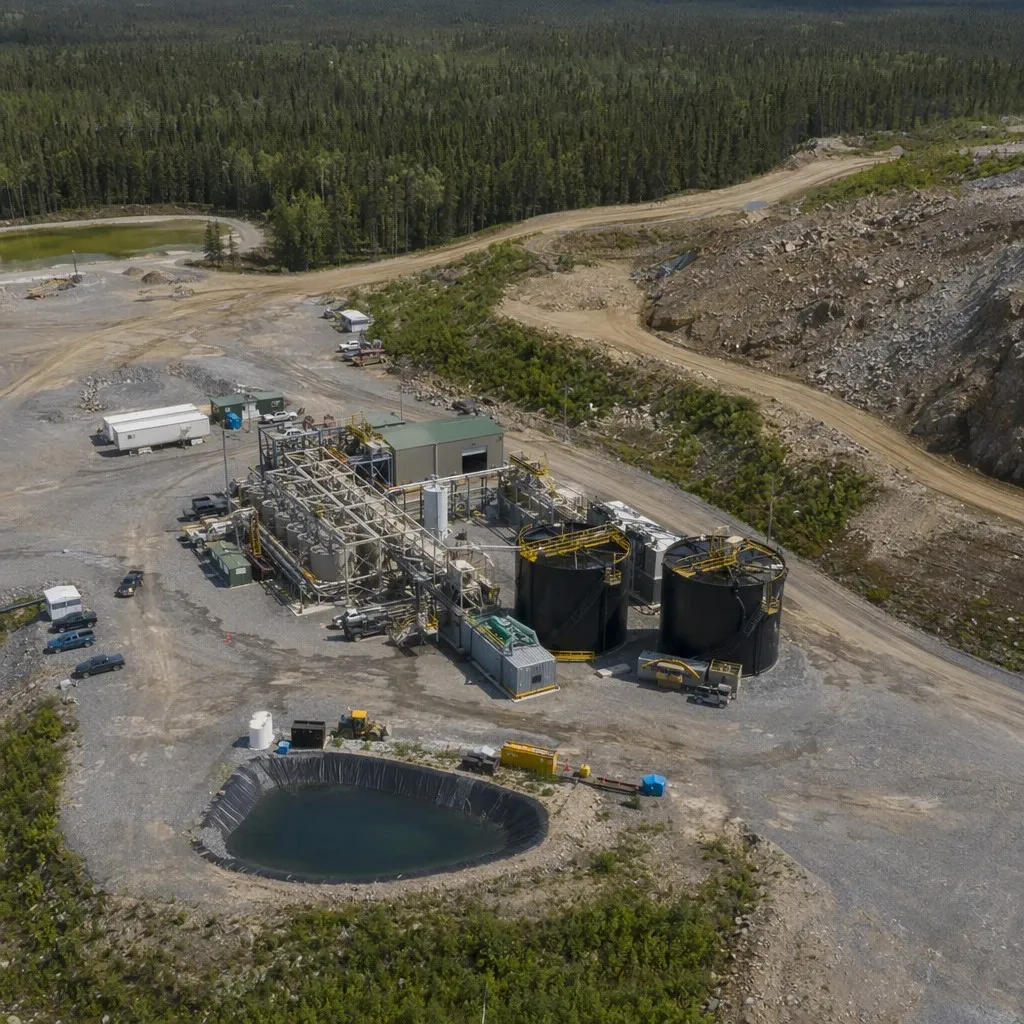
Figure 2: Junior gold mine CIP circuit in the Canadian Shield region, Ontario.
Operational Challenge: A junior miner in Ontario’s Timmins camp began processing ore from a previously uneconomic deposit containing 2.1% graphitic carbon. The natural carbon in the ore was aggressively preg-robbing, adsorbing gold-cyanide complexes before the activated carbon could compete. Using commodity-grade coconut carbon (R-Value 52%), the plant achieved only 91.3% recovery with soluble gold losses of 0.18 g/t in tailings. At 40,000 oz/year throughput, this represented over USD 600,000 in lost revenue annually—unsustainable for a startup.
The YICARB Solution: For preg-robbing ore environments, YICARB Ultra-Kinetic Coconut Carbon is engineered with optimized adsorption kinetics (R-Value 72%, Iodine 1150 mg/g, Hardness 99.0%) to improve gold capture performance.
Potential improvements from optimized activated carbon selection may include reduced soluble gold losses, improved adsorption efficiency and more stable recovery performance depending on ore characteristics and process conditions.. The premium carbon cost was fully recovered within 6 weeks of operation. Annual revenue increased by approximately USD 520,000.
Case 3.2: Eliminating Attrition Losses in a Remote CIL Startup (Western Australia)
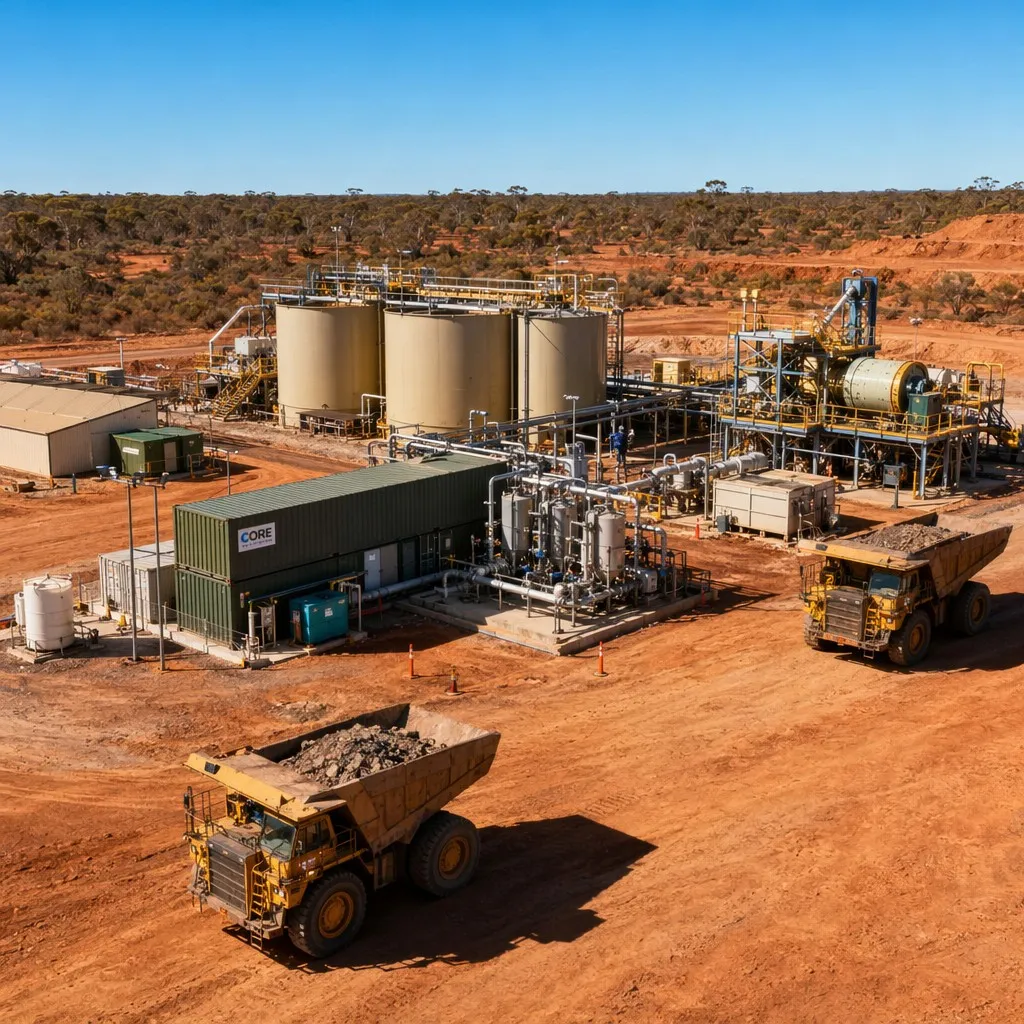
Figure 3: Startup CIL gold processing plant in the Western Australian Goldfields region.
Operational Challenge: A startup operation in the Kalgoorlie region, processing 250,000 tonnes/year of oxide ore through a newly commissioned CIL circuit, experienced severe carbon attrition within the first three months. The incumbent low-cost carbon (ASTM Hardness 96.5%) was fracturing in the high-shear agitated tanks, generating excessive fines. Daily make-up carbon consumption reached 55 g/t of ore—nearly double the industry benchmark of 30 g/t. Beyond the direct carbon replacement cost, the fines carried adsorbed gold past the 0.8 mm inter-stage safety screens. Gold-in-fines losses were estimated at USD 7,500 per week, and screen blinding forced bi-weekly maintenance shutdowns.
The YICARB Solution: We replaced the incumbent carbon with YICARB DuraGold GAC (8x16 mesh, ASTM Hardness 99.3%, Iodine 1050 mg/g). The carbon was pre-attritioned at our facility to remove sharp edges and weak grains before shipment—a critical value-add for startups that cannot afford on-site pre-attrition infrastructure.
Results: Make-up carbon consumption dropped to 28 g/t (49% reduction), saving USD 11,200/month in media costs. Gold-in-fines losses fell to near zero, contributing an additional 1.4% to overall plant recovery. Combined with elimination of bi-weekly shutdowns, total annual savings exceeded USD 210,000. The plant achieved sustained recovery of 98.2% and exceeded its nameplate throughput by 8%.
4. Conclusion: Smart Carbon Investment Drives Startup Success
For junior gold miners, every dollar spent must generate measurable returns. Activated carbon, while representing only 2–5% of total processing costs, is disproportionately responsible for overall gold recovery outcomes. The startup mindset should not be “what is the cheapest carbon I can buy?” but rather “what carbon profile maximizes my net recovered gold per tonne of ore?”
YICARB partners with junior miners worldwide to engineer cost-effective carbon solutions that match their specific ore challenges. Whether fighting preg-robbing in the Canadian Shield or attrition in the Western Australian outback, the right carbon specification is the fastest path to 98%+ recovery and bankable project economics.
Engineering Maximum Yield on a Junior Miner’s Budget through Strategic Carbon Selection
Date: July 14th, 2026
Author: Yicarb Technical Expert (15+ years experience in activated carbon industry)
Note: The examples presented in this article are illustrative scenarios based on common challenges in gold recovery operations. They are intended to demonstrate technical considerations and potential outcomes under specific operating conditions. Actual performance may vary depending on ore characteristics, process parameters and operational factors.
Figure 1: Industrial visualization of a startup-scale CIP/CIL gold recovery plant with multi-stage carbon adsorption circuit.
Abstract: For junior gold miners operating on tight capital budgets, the selection of activated carbon can mean the difference between a profitable operation and a failed venture. Many startups default to the cheapest carbon supplier, unaware that inferior media leads to gold losses through tailings, excessive attrition fines, and unnecessary downtime. This technical brief provides a practical engineering framework for startup mines to achieve 98%+ gold recovery by selecting the right carbon for their specific ore profile and circuit design. Two technical application examples based on common gold recovery challenges in Canada and Australia demonstrate how strategic carbon selection can influence operational performance and economic outcomes for junior mining operations.
1. Why Carbon Quality Is the Hidden Profit Lever for Junior Miners
In a typical 50,000 oz/year startup operation, soluble gold losses of just 0.05 g/t in tailings translate to roughly USD 200,000 in unrecovered revenue annually at current gold prices. For a junior miner with a USD 5 million processing plant, this is a 4% hit to the bottom line that can mean the difference between meeting debt covenants and defaulting.
The common misconception is that all coconut-shell activated carbons are interchangeable. In reality, the difference between a premium engineered carbon and a commodity-grade product manifests in three critical areas:
• Loading Capacity (K-Value): Higher K-value carbon loads more gold per kilogram, reducing the carbon inventory required and cutting make-up carbon costs.
• Mechanical Hardness (ASTM D3802): Carbon below 98% hardness generates micro-fines that escape inter-stage screens carrying adsorbed gold directly to tailings.
• Adsorption Kinetics (R-Value): Fast kinetics are essential for CIL circuits where the carbon must out-compete preg-robbing minerals in real time.
For a startup, the smart investment is not in the most expensive carbon, but in the carbon whose technical profile matches the specific metallurgical challenge of the ore body. YICARB’s application-engineering approach ensures junior miners pay for performance, not brand markup.
2. The Startup Miner’s Carbon Specification Checklist
When evaluating activated carbon suppliers on a limited budget, prioritize these four indicators:
|
Indicator |
Target |
Why It Matters for Your Bottom Line |
|
K-Value (Loading) |
> 30 mg Au/g |
Determines gold inventory on carbon. Higher loading = fewer carbon transfers, lower make-up rates, reduced operational cost. |
|
ASTM Hardness |
> 98.5% |
Non-negotiable for agitated tanks. Every 0.5% drop in hardness can increase gold-in-fines losses by 15–20%. |
|
R-Value (Kinetics) |
> 65% (30 min) |
Critical for CIL circuits. Slow kinetics = gold escapes before carbon captures it, especially with preg-robbing ores. |
|
PSD Uniformity |
> 95% on-spec |
Poor sizing blinds inter-stage screens causing pump cavitation and unplanned shutdowns. Downtime kills startup cash flow. |
3. Application Examples: Optimizing Activated Carbon Selection for Startup Gold Mines
Application Example 3.1: Managing Preg-Robbing Challenges in Canadian Gold Recovery Operations
Figure 2: Junior gold mine CIP circuit in the Canadian Shield region, Ontario.
Operational Challenge: A junior miner in Ontario’s Timmins camp began processing ore from a previously uneconomic deposit containing 2.1% graphitic carbon. The natural carbon in the ore was aggressively preg-robbing, adsorbing gold-cyanide complexes before the activated carbon could compete. Using commodity-grade coconut carbon (R-Value 52%), the plant achieved only 91.3% recovery with soluble gold losses of 0.18 g/t in tailings. At 40,000 oz/year throughput, this represented over USD 600,000 in lost revenue annually—unsustainable for a startup.
The YICARB Solution: For preg-robbing ore environments, YICARB Ultra-Kinetic Coconut Carbon is engineered with optimized adsorption kinetics (R-Value 72%, Iodine 1150 mg/g, Hardness 99.0%) to improve gold capture performance.
Potential improvements from optimized activated carbon selection may include reduced soluble gold losses, improved adsorption efficiency and more stable recovery performance depending on ore characteristics and process conditions.. The premium carbon cost was fully recovered within 6 weeks of operation. Annual revenue increased by approximately USD 520,000.
Case 3.2: Eliminating Attrition Losses in a Remote CIL Startup (Western Australia)
Figure 3: Startup CIL gold processing plant in the Western Australian Goldfields region.
Operational Challenge: A startup operation in the Kalgoorlie region, processing 250,000 tonnes/year of oxide ore through a newly commissioned CIL circuit, experienced severe carbon attrition within the first three months. The incumbent low-cost carbon (ASTM Hardness 96.5%) was fracturing in the high-shear agitated tanks, generating excessive fines. Daily make-up carbon consumption reached 55 g/t of ore—nearly double the industry benchmark of 30 g/t. Beyond the direct carbon replacement cost, the fines carried adsorbed gold past the 0.8 mm inter-stage safety screens. Gold-in-fines losses were estimated at USD 7,500 per week, and screen blinding forced bi-weekly maintenance shutdowns.
The YICARB Solution: We replaced the incumbent carbon with YICARB DuraGold GAC (8x16 mesh, ASTM Hardness 99.3%, Iodine 1050 mg/g). The carbon was pre-attritioned at our facility to remove sharp edges and weak grains before shipment—a critical value-add for startups that cannot afford on-site pre-attrition infrastructure.
Results: Make-up carbon consumption dropped to 28 g/t (49% reduction), saving USD 11,200/month in media costs. Gold-in-fines losses fell to near zero, contributing an additional 1.4% to overall plant recovery. Combined with elimination of bi-weekly shutdowns, total annual savings exceeded USD 210,000. The plant achieved sustained recovery of 98.2% and exceeded its nameplate throughput by 8%.
4. Conclusion: Smart Carbon Investment Drives Startup Success
For junior gold miners, every dollar spent must generate measurable returns. Activated carbon, while representing only 2–5% of total processing costs, is disproportionately responsible for overall gold recovery outcomes. The startup mindset should not be “what is the cheapest carbon I can buy?” but rather “what carbon profile maximizes my net recovered gold per tonne of ore?”
YICARB partners with junior miners worldwide to engineer cost-effective carbon solutions that match their specific ore challenges. Whether fighting preg-robbing in the Canadian Shield or attrition in the Western Australian outback, the right carbon specification is the fastest path to 98%+ recovery and bankable project economics.
Products
Solutions
Performance
Markets & Cases
Resources
Manufacturing & Quality
About Us
Contact Us

Copyright © 2026 Guangdong Yicarb Activated Carbon Co., Ltd. All Rights Reserved.