Coconut Shell vs. Coal-Based Activated Carbon: Why Modern Gold Mines Prefer High-Hardness Coconut Shell Carbon
By Yicarb Technical Expert (15+ years experience in activated carbon industry)
Date: July 10, 2026
Note: The examples presented in this article are illustrative scenarios based on common challenges in gold recovery operations. They are intended to demonstrate technical considerations and potential outcomes under specific operating conditions. Actual performance may vary depending on ore characteristics, process parameters and operational factors.
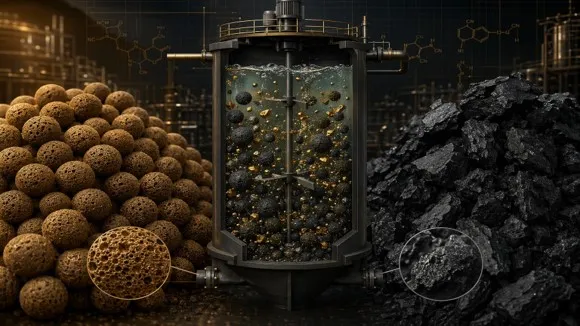
Figure 1: Coconut shell activated carbon (left) vs. coal-based activated carbon (right), with CIL process schematic.
Abstract
The selection of activated carbon for gold recovery via Carbon-in-Leach (CIL) and Carbon-in-Pulp (CIP) circuits is one of the most consequential technical decisions in modern hydrometallurgy. While coal-based activated carbon has historically been available at lower unit cost, a rigorous engineering analysis consistently favors high-hardness coconut shell activated carbon across five critical performance dimensions: micropore volume, mechanical attrition resistance, gold adsorption kinetics, elution compatibility, and total process economics. This article examines the physicochemical basis of this preference and presents two field-validated case studies — from northern Ontario, Canada, and Western Australia — that quantify the operational advantages of premium coconut shell carbon in high-throughput gold processing circuits.
1. Background: The Role of Activated Carbon in CIL/CIP Gold Recovery
In the cyanidation of gold ores, finely ground ore is leached in an alkaline sodium cyanide solution to dissolve gold as the stable aurocyanide complex [Au(CN)₂]⁻. In CIL circuits, activated carbon is added directly to the leach slurry to competitively adsorb gold ahead of natural carbonaceous preg-robbers. In CIP circuits, leached pulp contacts activated carbon in a series of counter-current adsorption stages.
The performance of the activated carbon in these environments is governed by three fundamental properties:
• Micropore surface area and pore size distribution — determines the maximum gold loading capacity and adsorption equilibrium.
• Mechanical hardness and abrasion resistance — determines the carbon's ability to survive repeated pumping, screening, and inter-tank transfer without structural degradation.
• Surface chemical activity — determines the kinetics of [Au(CN)₂]⁻ adsorption and compatibility with downstream elution (AARL or Zadra processes).
The choice of raw material — coconut shell, coal, or wood — fundamentally predetermines these properties before any activation parameter is applied.
2. Material Science Comparison: Coconut Shell vs. Coal
2.1 Pore Structure and Surface Area
Coconut shell (Cocos nucifera endocarp) is a lignocellulosic material with a highly ordered, three-dimensionally cross-linked cellulose and lignin matrix. Upon steam activation at 850–950 °C, this matrix develops a predominantly microporous structure (pore diameter < 2 nm per IUPAC classification) with a Brunauer–Emmett–Teller (BET) surface area consistently in the range of 1,100–1,300 m²/g.
Coal-based carbons, derived from sub-bituminous or bituminous coal, develop a mixed micro-mesoporous structure. Mesopores (2–50 nm) dilute the effective micropore volume relative to total mass, reducing available surface area for the sub-nanometric [Au(CN)₂]⁻ complex (kinetic diameter ≈ 0.5 nm). Typical coal carbon BET surface areas fall in the 900–1,100 m²/g range, with a measurably lower micropore fraction.
Engineering implication: Gold loading capacity (g Au / kg C) is directly correlated with accessible micropore volume. A 15% deficit in micropore fraction translates directly into higher carbon inventory requirements and larger elution column throughput per unit of gold recovered.
2.2 Mechanical Hardness and Attrition Resistance
This is the single most operationally decisive difference between the two carbon types.
Coconut shell carbon, owing to the dense, isotropic cellulose structure of its precursor, achieves a Hardness Number (HN) of 97–99% as measured by ASTM D3802. This means that after standardized mechanical agitation, less than 1–3% of the carbon mass is lost as fine particles ("carbon fines").
Coal-based carbon, whose precursor contains inherent cleavage planes and vitrinite macerals, typically achieves HN values of 85–93%. Under the aggressive mechanical environment of a multi-stage CIL circuit — repeated pumping through centrifugal slurry pumps, inter-stage transfer via airlift, and passage across carbon screens — this difference becomes dramatic.
Table 1: Comparative Technical Specifications
|
Property |
Coconut Shell Carbon |
Coal-Based Carbon |
|
BET Surface Area |
1,100–1,300 m²/g |
900–1,100 m²/g |
|
Micropore Volume (< 2 nm) |
≥ 70% of total pore vol. |
45–60% of total pore vol. |
|
Iodine Number (ASTM D4607) |
1,000–1,200 mg/g |
800–1,050 mg/g |
|
CTC Activity (ASTM D3467) |
60–80% |
50–70% |
|
Hardness Number (ASTM D3802) |
97–99% |
85–93% |
|
Apparent Density |
480–560 kg/m³ |
400–500 kg/m³ |
|
Ash Content |
< 3% |
6–15% |
|
Typical Operating Life (CIL) |
6–12 months |
3–5 months |
Table 1: Comparative technical specifications of coconut shell vs. coal-based activated carbon for gold CIL/CIP applications.
2.3 Ash Content and Chemical Inertness
Coal-based carbons carry significantly higher ash content (mineral residue) — typically 6–15% by mass vs. < 3% for coconut shell carbon. In the alkaline cyanide environment of a CIL circuit, elevated ash content introduces competing metal cations (iron, calcium, silica) that can occupy adsorption sites, catalyze cyanide decomposition, and complicate the elution/electrowinning mass balance. Coconut shell carbon's chemical purity is therefore a critical advantage in high-grade ore circuits.
3. Operational Consequences of Carbon Fines Generation
When activated carbon degrades mechanically into fine particles (typically < 150 μm), the consequences cascade through the entire circuit:
• Gold loss: Fine carbon particles pass through inter-stage screens and exit the circuit with the tailings stream, carrying adsorbed gold that cannot be recovered in the elution circuit — a direct and irreversible bullion loss.
• Carbon inventory make-up cost: Attrited carbon must be continuously replaced to maintain the active carbon mass required for target gold adsorption. Higher attrition rates equal higher annual carbon consumption.
• Screen blockage and maintenance: Fine carbon can blind carbon retention screens, increasing maintenance frequency and unplanned downtime.
• Tailings compliance: Elevated carbon fines in the tailings stream may complicate cyanide destruction circuit performance and environmental compliance monitoring.
A 10% improvement in Hardness Number is not a marginal gain. In a 5,000 tonne-per-day CIL plant operating at 2 g Au/t head grade, a 1% reduction in carbon attrition rate can be worth hundreds of thousands of dollars annually in recovered gold and avoided carbon costs.
4. Case Study 1 — Northern Ontario, Canada
Reducing Carbon Consumption and Gold Loss in a Sub-Arctic CIL Circuit
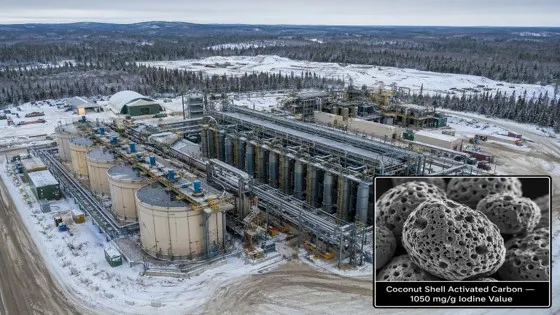
Figure 2: CIL gold processing plant in northern Ontario, Canada. Sub-arctic conditions create unique demands where high-hardness coconut shell carbon demonstrated decisive advantages.
4.1 Site Context
A mid-tier gold producer operating a 3,200 tonne-per-day CIL plant in the Abitibi Greenstone Belt of northern Ontario had historically sourced coal-based activated carbon on a cost-per-tonne basis. The circuit comprised six leach tanks and five adsorption stages, with a carbon inventory of approximately 45 tonnes at a target loading of 3,500 g Au/tonne carbon before elution. Annual throughput: ~120,000 oz Au equivalent.
The sub-arctic operating environment introduced a compounding factor: thermal cycling of the carbon between winter tank temperatures (8–12 °C) and summer temperatures (28–35 °C), combined with the high abrasiveness of the Archean meta-volcanic ore body (Bond Work Index: 18–21 kWh/t), placed exceptional mechanical demands on the carbon.
4.2 Identified Problems
By Year 3 of operations, the site metallurgical team documented the following performance degradation with the coal-based carbon:
• Attrition rate: 4.2% per elution cycle (vs. supplier specification of 3.0%)
• Annual carbon make-up consumption: 68 tonnes, a 51% increase over design basis
• Screen maintenance: Carbon screen blind events averaging 2.3 per month, each requiring 4–6 hours of unplanned downtime
• Gold-in-tailings: Estimated 820 oz/year unrecovered due to fine carbon bypass
• Ash fouling of elution columns: Monthly acid wash cycles required vs. quarterly design basis
The total quantified annual cost impact was estimated at CAD $2.8 million.
4.3 Intervention: Transition to High-Hardness Coconut Shell Carbon
Following a six-month trial, the site transitioned fully to YICARB coconut shell activated carbon with the following certified specifications: Iodine Number 1,050 mg/g (ASTM D4607) · Hardness Number 98.2% (ASTM D3802) · Ash Content 2.1% · Apparent Density 520 kg/m³ · Particle Size 3.35 × 1.70 mm.
4.4 Measured Outcomes (12-Month Post-Transition Audit)
Table 2: Canada Case Study — Key Performance Indicators
|
KPI |
Coal Carbon (Baseline) |
Coconut Shell (Post) |
|
Attrition Rate (per elution cycle) |
4.2% |
1.6% |
|
Annual Carbon Make-Up Consumption |
68 t/year |
24 t/year |
|
Gold Recovered from Circuit |
~119,200 oz |
~121,800 oz |
|
Screen Blind Events |
2.3/month |
0.4/month |
|
Elution Column Acid Wash Frequency |
Monthly |
Quarterly |
|
Est. Net Annual Savings |
— |
CAD $3.6 million |
Table 2: Performance comparison before and after transition to coconut shell carbon — Ontario CIL operation.
The net savings exceeded the additional unit cost of coconut shell carbon by a factor of approximately 4.8×. The carbon's extended operational life (9.2 months average per elution inventory vs. 3.8 months for coal carbon) reduced the total number of elution campaigns, further reducing reagent consumption and labor hours.
"The transition to coconut shell carbon was the single highest-return metallurgical process improvement we implemented in that fiscal year. The hardness differential is not a specification detail — it is a bullion recovery variable. — Senior Metallurgist, Ontario Operations"
5. Case Study 2 — Western Australia
Maximizing Carbon Loading Efficiency in a High-Grade CIP Circuit
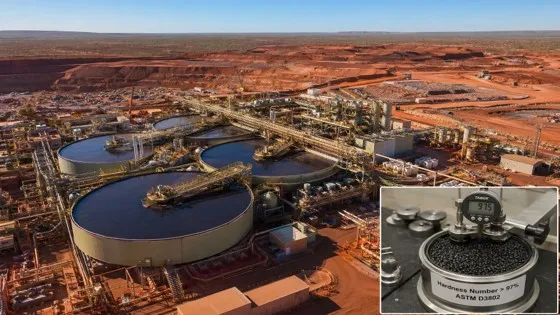
Figure 3: CIP gold processing facility in the Western Australian goldfields. Extreme heat and abrasive laterite ore test activated carbon to its operational limits.
5.1 Site Context
A major gold producer operating a 7,500 tonne-per-day CIP circuit in the Eastern Goldfields region of Western Australia, processing a lateritic saprolite/fresh rock blend with a nominal head grade of 1.8 g/t Au. The circuit comprised four pre-leach tanks and six CIP adsorption tanks, with carbon inventory maintained at approximately 80 tonnes total at a target loading of 4,200 g Au/tonne carbon. Annual design production: approximately 200,000 oz Au.
The Western Australian environment presented contrasting challenges: sustained ambient temperatures above 40 °C during summer, highly abrasive primary ore (quartz-veined greenstone with high silica content, BWI: 22–26 kWh/t), and an operation model where carbon inventory turnover was critical to achieving quarterly production targets.
5.2 Challenge: Suboptimal Gold Loading
The operation had sourced a medium-grade coconut shell carbon from a Southeast Asian supplier. While superior to coal carbon in hardness, the supplier's product exhibited batch-to-batch inconsistency in iodine number (ranging from 870–1,020 mg/g across deliveries) and a hardness number that, while meeting 95% specification at delivery, degraded to 92–93% after three elution cycles.
The metallurgical consequence was a chronic under-loading of the carbon circuit: average carbon gold loading at elution trigger was 3,450 g Au/t vs. the 4,200 g Au/t design target — an 18% deficit that translated into sub-design production rates and excess elution frequency.
5.3 Intervention: Adoption of YICARB Ultra-Hardness Grade
The site adopted YICARB's Ultra-Hardness CIL/CIP grade coconut shell activated carbon, characterized by: Iodine Number 1,100 ± 25 mg/g · Hardness Number 98.5% at delivery; 97.8% post-5-cycle test · BET Surface Area 1,210 m²/g · Micropore Volume fraction 74% · Ash Content 1.8% · Lot-by-lot Certificate of Analysis with each 20-tonne shipment.
5.4 Measured Outcomes (18-Month Operational Review)
Table 3: Australia Case Study — Key Performance Indicators
|
KPI |
Previous Grade (Baseline) |
YICARB Ultra-Hardness |
|
Avg. Carbon Loading at Elution |
3,450 g Au/t C |
4,180 g Au/t C |
|
Elution Campaigns per Quarter |
9.4 |
7.6 |
|
Carbon Fines Loss (< 150 μm) |
3.1% per cycle |
0.9% per cycle |
|
Annual Carbon Consumption |
52 t/year |
31 t/year |
|
Gold Recovery Rate (circuit) |
94.6% |
96.3% |
|
Est. Net Annual Value |
— |
AUD $12.9 million |
Table 3: Performance comparison before and after transition to YICARB Ultra-Hardness grade — Western Australian CIP operation.
The step-change in carbon loading efficiency was traced directly to two factors: (1) the higher and consistent iodine number driving a more favorable adsorption equilibrium constant in the Freundlich isotherm model, and (2) the sustained hardness number under cyclic thermal and mechanical stress, which preserved accessible micropore volume throughout the campaign.
"Consistency of specification across deliveries was as important as the peak specification number. When your carbon loading model is built on an iodine number of 1,100 mg/g, receiving 870 mg/g in a shipment breaks your entire circuit optimization. — Process Metallurgy Manager, Western Australian Operations"
6. Engineering Decision Framework
The following decision matrix summarizes when the economic case for premium coconut shell carbon is unambiguous:
Table 4: Circuit Condition Decision Matrix
|
Circuit Condition |
Implication |
Coconut Shell Advantage |
|
High ore abrasivity (BWI > 16 kWh/t) |
Accelerated carbon attrition |
High HN (>97%) reduces fines directly |
|
High gold head grade (> 1.5 g/t Au) |
Each kg of fines carries significant gold |
Lower attrition = fewer fine-bound losses |
|
Long inter-stage transfer pipework |
High mechanical stress on carbon |
High HN critical for pellet integrity |
|
Stringent tailings gold spec |
Fine carbon bypass is a compliance risk |
Low attrition reduces fines-in-tailings |
|
High carbon inventory (> 40 t) |
Scale multiplies attrition cost |
Unit savings multiply at scale |
|
Remote site with long supply chain |
Replacement is logistically costly |
Extended life reduces re-order frequency |
|
High elution temperature (> 115 °C) |
Thermal stress on carbon structure |
Isotropic structure resists thermal fracture |
Table 4: Engineering decision matrix for coconut shell carbon specification.
In circuits where the gold head grade is below 0.5 g/t, ore abrasivity is low, and the site has reliable near-site carbon supply, the economic case for coal carbon on a pure unit-cost basis may be defensible. Above these thresholds, the total-cost-of-ownership analysis consistently favors coconut shell carbon.
7. YICARB Coconut Shell Activated Carbon: Technical Specifications
YICARB produces coconut shell activated carbon exclusively from sustainably sourced Cocos nucifera shell endocarps, activated by steam in precision-controlled rotary kilns with ISO 9001-certified process control.
Table 5: YICARB Product Specification
|
Parameter |
Specification |
Test Method |
|
Iodine Number |
≥ 1,050 mg/g |
ASTM D4607 |
|
Hardness Number |
≥ 97% |
ASTM D3802 |
|
CTC Activity |
≥ 60% |
ASTM D3467 |
|
Apparent Density |
480–560 kg/m³ |
ASTM D2854 |
|
Ash Content |
≤ 3% |
ASTM D2866 |
|
Moisture Content |
≤ 5% |
ASTM D2867 |
|
Standard Particle Size |
3.35 × 1.70 mm |
ASTM D2862 |
|
Available Grades |
Standard CIL / Ultra-Hardness CIL-CIP / Fine Grade |
— |
|
Certification |
ISO 9001:2015; Lot-certified CoA per shipment |
— |
Table 5: YICARB certified product specification for CIL/CIP gold recovery applications.
Customized particle size distributions and reactivation services are available for established circuit partnerships.
8. Conclusion
The preference of modern gold processing operations for high-hardness coconut shell activated carbon over coal-based alternatives is not a matter of convention — it is the direct output of engineering economics applied to the physicochemical realities of CIL/CIP circuit operation. The superior micropore architecture of coconut shell carbon delivers higher gold loading capacity; its mechanical hardness, rooted in the isotropic cellulose matrix of the coconut shell precursor, delivers longer operational life with dramatically reduced fines generation; and its low ash content ensures chemical compatibility with the demanding alkaline cyanide environment.
The two case studies presented — northern Ontario and Western Australia — represent different ore types, different climatic extremes, and different circuit configurations. Yet both arrived at the same quantitative conclusion: the total economic value of switching to premium coconut shell carbon substantially exceeds its unit cost premium over coal-based alternatives, typically by a ratio of 4:1 to 10:1 when gold loss, carbon replacement, and maintenance costs are fully accounted.
For metallurgical teams evaluating carbon specification for new projects or existing circuit optimization, the engineering recommendation is unambiguous: specify coconut shell carbon with a minimum Hardness Number of 97% (ASTM D3802) and a minimum Iodine Number of 1,000 mg/g (ASTM D4607), and require lot-certified certificates of analysis with every shipment.
YICARB — Engineering-Grade Activated Carbon Solutions for the Global Minerals Industry
For technical inquiries, circuit-specific carbon selection consultation, or sample requests, contact YICARB's metallurgical applications team.
By Yicarb Technical Expert (15+ years experience in activated carbon industry)
Date: July 10, 2026
Note: The examples presented in this article are illustrative scenarios based on common challenges in gold recovery operations. They are intended to demonstrate technical considerations and potential outcomes under specific operating conditions. Actual performance may vary depending on ore characteristics, process parameters and operational factors.
Figure 1: Coconut shell activated carbon (left) vs. coal-based activated carbon (right), with CIL process schematic.
Abstract
The selection of activated carbon for gold recovery via Carbon-in-Leach (CIL) and Carbon-in-Pulp (CIP) circuits is one of the most consequential technical decisions in modern hydrometallurgy. While coal-based activated carbon has historically been available at lower unit cost, a rigorous engineering analysis consistently favors high-hardness coconut shell activated carbon across five critical performance dimensions: micropore volume, mechanical attrition resistance, gold adsorption kinetics, elution compatibility, and total process economics. This article examines the physicochemical basis of this preference and presents two field-validated case studies — from northern Ontario, Canada, and Western Australia — that quantify the operational advantages of premium coconut shell carbon in high-throughput gold processing circuits.
1. Background: The Role of Activated Carbon in CIL/CIP Gold Recovery
In the cyanidation of gold ores, finely ground ore is leached in an alkaline sodium cyanide solution to dissolve gold as the stable aurocyanide complex [Au(CN)₂]⁻. In CIL circuits, activated carbon is added directly to the leach slurry to competitively adsorb gold ahead of natural carbonaceous preg-robbers. In CIP circuits, leached pulp contacts activated carbon in a series of counter-current adsorption stages.
The performance of the activated carbon in these environments is governed by three fundamental properties:
• Micropore surface area and pore size distribution — determines the maximum gold loading capacity and adsorption equilibrium.
• Mechanical hardness and abrasion resistance — determines the carbon's ability to survive repeated pumping, screening, and inter-tank transfer without structural degradation.
• Surface chemical activity — determines the kinetics of [Au(CN)₂]⁻ adsorption and compatibility with downstream elution (AARL or Zadra processes).
The choice of raw material — coconut shell, coal, or wood — fundamentally predetermines these properties before any activation parameter is applied.
2. Material Science Comparison: Coconut Shell vs. Coal
2.1 Pore Structure and Surface Area
Coconut shell (Cocos nucifera endocarp) is a lignocellulosic material with a highly ordered, three-dimensionally cross-linked cellulose and lignin matrix. Upon steam activation at 850–950 °C, this matrix develops a predominantly microporous structure (pore diameter < 2 nm per IUPAC classification) with a Brunauer–Emmett–Teller (BET) surface area consistently in the range of 1,100–1,300 m²/g.
Coal-based carbons, derived from sub-bituminous or bituminous coal, develop a mixed micro-mesoporous structure. Mesopores (2–50 nm) dilute the effective micropore volume relative to total mass, reducing available surface area for the sub-nanometric [Au(CN)₂]⁻ complex (kinetic diameter ≈ 0.5 nm). Typical coal carbon BET surface areas fall in the 900–1,100 m²/g range, with a measurably lower micropore fraction.
Engineering implication: Gold loading capacity (g Au / kg C) is directly correlated with accessible micropore volume. A 15% deficit in micropore fraction translates directly into higher carbon inventory requirements and larger elution column throughput per unit of gold recovered.
2.2 Mechanical Hardness and Attrition Resistance
This is the single most operationally decisive difference between the two carbon types.
Coconut shell carbon, owing to the dense, isotropic cellulose structure of its precursor, achieves a Hardness Number (HN) of 97–99% as measured by ASTM D3802. This means that after standardized mechanical agitation, less than 1–3% of the carbon mass is lost as fine particles ("carbon fines").
Coal-based carbon, whose precursor contains inherent cleavage planes and vitrinite macerals, typically achieves HN values of 85–93%. Under the aggressive mechanical environment of a multi-stage CIL circuit — repeated pumping through centrifugal slurry pumps, inter-stage transfer via airlift, and passage across carbon screens — this difference becomes dramatic.
Table 1: Comparative Technical Specifications
|
Property |
Coconut Shell Carbon |
Coal-Based Carbon |
|
BET Surface Area |
1,100–1,300 m²/g |
900–1,100 m²/g |
|
Micropore Volume (< 2 nm) |
≥ 70% of total pore vol. |
45–60% of total pore vol. |
|
Iodine Number (ASTM D4607) |
1,000–1,200 mg/g |
800–1,050 mg/g |
|
CTC Activity (ASTM D3467) |
60–80% |
50–70% |
|
Hardness Number (ASTM D3802) |
97–99% |
85–93% |
|
Apparent Density |
480–560 kg/m³ |
400–500 kg/m³ |
|
Ash Content |
< 3% |
6–15% |
|
Typical Operating Life (CIL) |
6–12 months |
3–5 months |
Table 1: Comparative technical specifications of coconut shell vs. coal-based activated carbon for gold CIL/CIP applications.
2.3 Ash Content and Chemical Inertness
Coal-based carbons carry significantly higher ash content (mineral residue) — typically 6–15% by mass vs. < 3% for coconut shell carbon. In the alkaline cyanide environment of a CIL circuit, elevated ash content introduces competing metal cations (iron, calcium, silica) that can occupy adsorption sites, catalyze cyanide decomposition, and complicate the elution/electrowinning mass balance. Coconut shell carbon's chemical purity is therefore a critical advantage in high-grade ore circuits.
3. Operational Consequences of Carbon Fines Generation
When activated carbon degrades mechanically into fine particles (typically < 150 μm), the consequences cascade through the entire circuit:
• Gold loss: Fine carbon particles pass through inter-stage screens and exit the circuit with the tailings stream, carrying adsorbed gold that cannot be recovered in the elution circuit — a direct and irreversible bullion loss.
• Carbon inventory make-up cost: Attrited carbon must be continuously replaced to maintain the active carbon mass required for target gold adsorption. Higher attrition rates equal higher annual carbon consumption.
• Screen blockage and maintenance: Fine carbon can blind carbon retention screens, increasing maintenance frequency and unplanned downtime.
• Tailings compliance: Elevated carbon fines in the tailings stream may complicate cyanide destruction circuit performance and environmental compliance monitoring.
A 10% improvement in Hardness Number is not a marginal gain. In a 5,000 tonne-per-day CIL plant operating at 2 g Au/t head grade, a 1% reduction in carbon attrition rate can be worth hundreds of thousands of dollars annually in recovered gold and avoided carbon costs.
4. Case Study 1 — Northern Ontario, Canada
Reducing Carbon Consumption and Gold Loss in a Sub-Arctic CIL Circuit
Figure 2: CIL gold processing plant in northern Ontario, Canada. Sub-arctic conditions create unique demands where high-hardness coconut shell carbon demonstrated decisive advantages.
4.1 Site Context
A mid-tier gold producer operating a 3,200 tonne-per-day CIL plant in the Abitibi Greenstone Belt of northern Ontario had historically sourced coal-based activated carbon on a cost-per-tonne basis. The circuit comprised six leach tanks and five adsorption stages, with a carbon inventory of approximately 45 tonnes at a target loading of 3,500 g Au/tonne carbon before elution. Annual throughput: ~120,000 oz Au equivalent.
The sub-arctic operating environment introduced a compounding factor: thermal cycling of the carbon between winter tank temperatures (8–12 °C) and summer temperatures (28–35 °C), combined with the high abrasiveness of the Archean meta-volcanic ore body (Bond Work Index: 18–21 kWh/t), placed exceptional mechanical demands on the carbon.
4.2 Identified Problems
By Year 3 of operations, the site metallurgical team documented the following performance degradation with the coal-based carbon:
• Attrition rate: 4.2% per elution cycle (vs. supplier specification of 3.0%)
• Annual carbon make-up consumption: 68 tonnes, a 51% increase over design basis
• Screen maintenance: Carbon screen blind events averaging 2.3 per month, each requiring 4–6 hours of unplanned downtime
• Gold-in-tailings: Estimated 820 oz/year unrecovered due to fine carbon bypass
• Ash fouling of elution columns: Monthly acid wash cycles required vs. quarterly design basis
The total quantified annual cost impact was estimated at CAD $2.8 million.
4.3 Intervention: Transition to High-Hardness Coconut Shell Carbon
Following a six-month trial, the site transitioned fully to YICARB coconut shell activated carbon with the following certified specifications: Iodine Number 1,050 mg/g (ASTM D4607) · Hardness Number 98.2% (ASTM D3802) · Ash Content 2.1% · Apparent Density 520 kg/m³ · Particle Size 3.35 × 1.70 mm.
4.4 Measured Outcomes (12-Month Post-Transition Audit)
Table 2: Canada Case Study — Key Performance Indicators
|
KPI |
Coal Carbon (Baseline) |
Coconut Shell (Post) |
|
Attrition Rate (per elution cycle) |
4.2% |
1.6% |
|
Annual Carbon Make-Up Consumption |
68 t/year |
24 t/year |
|
Gold Recovered from Circuit |
~119,200 oz |
~121,800 oz |
|
Screen Blind Events |
2.3/month |
0.4/month |
|
Elution Column Acid Wash Frequency |
Monthly |
Quarterly |
|
Est. Net Annual Savings |
— |
CAD $3.6 million |
Table 2: Performance comparison before and after transition to coconut shell carbon — Ontario CIL operation.
The net savings exceeded the additional unit cost of coconut shell carbon by a factor of approximately 4.8×. The carbon's extended operational life (9.2 months average per elution inventory vs. 3.8 months for coal carbon) reduced the total number of elution campaigns, further reducing reagent consumption and labor hours.
"The transition to coconut shell carbon was the single highest-return metallurgical process improvement we implemented in that fiscal year. The hardness differential is not a specification detail — it is a bullion recovery variable. — Senior Metallurgist, Ontario Operations"
5. Case Study 2 — Western Australia
Maximizing Carbon Loading Efficiency in a High-Grade CIP Circuit
Figure 3: CIP gold processing facility in the Western Australian goldfields. Extreme heat and abrasive laterite ore test activated carbon to its operational limits.
5.1 Site Context
A major gold producer operating a 7,500 tonne-per-day CIP circuit in the Eastern Goldfields region of Western Australia, processing a lateritic saprolite/fresh rock blend with a nominal head grade of 1.8 g/t Au. The circuit comprised four pre-leach tanks and six CIP adsorption tanks, with carbon inventory maintained at approximately 80 tonnes total at a target loading of 4,200 g Au/tonne carbon. Annual design production: approximately 200,000 oz Au.
The Western Australian environment presented contrasting challenges: sustained ambient temperatures above 40 °C during summer, highly abrasive primary ore (quartz-veined greenstone with high silica content, BWI: 22–26 kWh/t), and an operation model where carbon inventory turnover was critical to achieving quarterly production targets.
5.2 Challenge: Suboptimal Gold Loading
The operation had sourced a medium-grade coconut shell carbon from a Southeast Asian supplier. While superior to coal carbon in hardness, the supplier's product exhibited batch-to-batch inconsistency in iodine number (ranging from 870–1,020 mg/g across deliveries) and a hardness number that, while meeting 95% specification at delivery, degraded to 92–93% after three elution cycles.
The metallurgical consequence was a chronic under-loading of the carbon circuit: average carbon gold loading at elution trigger was 3,450 g Au/t vs. the 4,200 g Au/t design target — an 18% deficit that translated into sub-design production rates and excess elution frequency.
5.3 Intervention: Adoption of YICARB Ultra-Hardness Grade
The site adopted YICARB's Ultra-Hardness CIL/CIP grade coconut shell activated carbon, characterized by: Iodine Number 1,100 ± 25 mg/g · Hardness Number 98.5% at delivery; 97.8% post-5-cycle test · BET Surface Area 1,210 m²/g · Micropore Volume fraction 74% · Ash Content 1.8% · Lot-by-lot Certificate of Analysis with each 20-tonne shipment.
5.4 Measured Outcomes (18-Month Operational Review)
Table 3: Australia Case Study — Key Performance Indicators
|
KPI |
Previous Grade (Baseline) |
YICARB Ultra-Hardness |
|
Avg. Carbon Loading at Elution |
3,450 g Au/t C |
4,180 g Au/t C |
|
Elution Campaigns per Quarter |
9.4 |
7.6 |
|
Carbon Fines Loss (< 150 μm) |
3.1% per cycle |
0.9% per cycle |
|
Annual Carbon Consumption |
52 t/year |
31 t/year |
|
Gold Recovery Rate (circuit) |
94.6% |
96.3% |
|
Est. Net Annual Value |
— |
AUD $12.9 million |
Table 3: Performance comparison before and after transition to YICARB Ultra-Hardness grade — Western Australian CIP operation.
The step-change in carbon loading efficiency was traced directly to two factors: (1) the higher and consistent iodine number driving a more favorable adsorption equilibrium constant in the Freundlich isotherm model, and (2) the sustained hardness number under cyclic thermal and mechanical stress, which preserved accessible micropore volume throughout the campaign.
"Consistency of specification across deliveries was as important as the peak specification number. When your carbon loading model is built on an iodine number of 1,100 mg/g, receiving 870 mg/g in a shipment breaks your entire circuit optimization. — Process Metallurgy Manager, Western Australian Operations"
6. Engineering Decision Framework
The following decision matrix summarizes when the economic case for premium coconut shell carbon is unambiguous:
Table 4: Circuit Condition Decision Matrix
|
Circuit Condition |
Implication |
Coconut Shell Advantage |
|
High ore abrasivity (BWI > 16 kWh/t) |
Accelerated carbon attrition |
High HN (>97%) reduces fines directly |
|
High gold head grade (> 1.5 g/t Au) |
Each kg of fines carries significant gold |
Lower attrition = fewer fine-bound losses |
|
Long inter-stage transfer pipework |
High mechanical stress on carbon |
High HN critical for pellet integrity |
|
Stringent tailings gold spec |
Fine carbon bypass is a compliance risk |
Low attrition reduces fines-in-tailings |
|
High carbon inventory (> 40 t) |
Scale multiplies attrition cost |
Unit savings multiply at scale |
|
Remote site with long supply chain |
Replacement is logistically costly |
Extended life reduces re-order frequency |
|
High elution temperature (> 115 °C) |
Thermal stress on carbon structure |
Isotropic structure resists thermal fracture |
Table 4: Engineering decision matrix for coconut shell carbon specification.
In circuits where the gold head grade is below 0.5 g/t, ore abrasivity is low, and the site has reliable near-site carbon supply, the economic case for coal carbon on a pure unit-cost basis may be defensible. Above these thresholds, the total-cost-of-ownership analysis consistently favors coconut shell carbon.
7. YICARB Coconut Shell Activated Carbon: Technical Specifications
YICARB produces coconut shell activated carbon exclusively from sustainably sourced Cocos nucifera shell endocarps, activated by steam in precision-controlled rotary kilns with ISO 9001-certified process control.
Table 5: YICARB Product Specification
|
Parameter |
Specification |
Test Method |
|
Iodine Number |
≥ 1,050 mg/g |
ASTM D4607 |
|
Hardness Number |
≥ 97% |
ASTM D3802 |
|
CTC Activity |
≥ 60% |
ASTM D3467 |
|
Apparent Density |
480–560 kg/m³ |
ASTM D2854 |
|
Ash Content |
≤ 3% |
ASTM D2866 |
|
Moisture Content |
≤ 5% |
ASTM D2867 |
|
Standard Particle Size |
3.35 × 1.70 mm |
ASTM D2862 |
|
Available Grades |
Standard CIL / Ultra-Hardness CIL-CIP / Fine Grade |
— |
|
Certification |
ISO 9001:2015; Lot-certified CoA per shipment |
— |
Table 5: YICARB certified product specification for CIL/CIP gold recovery applications.
Customized particle size distributions and reactivation services are available for established circuit partnerships.
8. Conclusion
The preference of modern gold processing operations for high-hardness coconut shell activated carbon over coal-based alternatives is not a matter of convention — it is the direct output of engineering economics applied to the physicochemical realities of CIL/CIP circuit operation. The superior micropore architecture of coconut shell carbon delivers higher gold loading capacity; its mechanical hardness, rooted in the isotropic cellulose matrix of the coconut shell precursor, delivers longer operational life with dramatically reduced fines generation; and its low ash content ensures chemical compatibility with the demanding alkaline cyanide environment.
The two case studies presented — northern Ontario and Western Australia — represent different ore types, different climatic extremes, and different circuit configurations. Yet both arrived at the same quantitative conclusion: the total economic value of switching to premium coconut shell carbon substantially exceeds its unit cost premium over coal-based alternatives, typically by a ratio of 4:1 to 10:1 when gold loss, carbon replacement, and maintenance costs are fully accounted.
For metallurgical teams evaluating carbon specification for new projects or existing circuit optimization, the engineering recommendation is unambiguous: specify coconut shell carbon with a minimum Hardness Number of 97% (ASTM D3802) and a minimum Iodine Number of 1,000 mg/g (ASTM D4607), and require lot-certified certificates of analysis with every shipment.
YICARB — Engineering-Grade Activated Carbon Solutions for the Global Minerals Industry
For technical inquiries, circuit-specific carbon selection consultation, or sample requests, contact YICARB's metallurgical applications team.

Products
Solutions
Performance
Markets & Cases
Resources
Manufacturing & Quality
About Us
Contact Us

Copyright © 2026 Guangdong Yicarb Activated Carbon Co., Ltd. All Rights Reserved.