
Canada
• Market focus: CIP and CIL circuits across established and emerging gold operations
• Common review areas: ore variability, carbon integrity, regeneration and gold-bearing fines
• Operating context: cold-climate logistics, storage, maintenance and traceable technical support
Technical Scenario 1: Investigating Preg-Robbing Risk in a Canadian CIL Plant
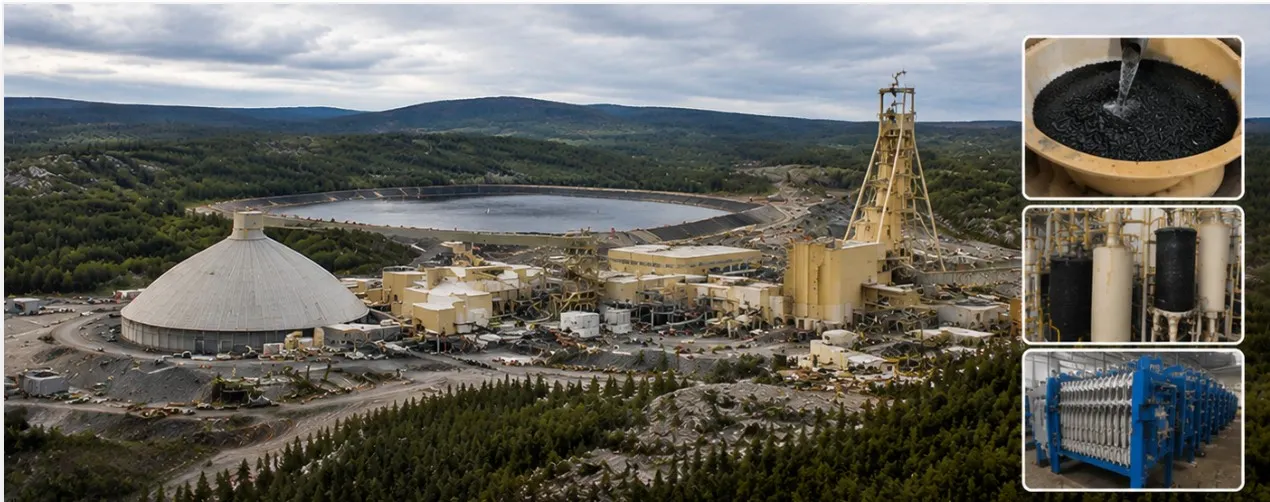
Illustrative circuit image; no specific customer or site test data referenced.
Typical Operating Challenge: When carbonaceous or other adsorptive components in an ore compete for dissolved gold, soluble and solid-phase losses can change with ore blend and operating conditions. Low recovery should not be attributed to carbon kinetics until leach performance, residence time, oxygen, cyanide, pH, solution chemistry, and preg-robbing behavior have been assessed together.
Technical Assessment: Use site-specific mineralogical work and comparative leach, CIL, or preg-robbing test work to confirm the mechanism. Review the stage solution profile and compare fresh and regenerated carbon with a consistent kinetics method. An isolated tailings assay or iodine number is not sufficient evidence.
YICARB® Technical Approach: If test work shows that adsorption rate is limiting, YICARB® can compare suitable AU Series grades under the site's solution conditions. The recommended product should still meet the circuit's requirements for hardness, particle integrity, particle-size distribution, and regeneration stability.
Verification Before Any Performance Claim: Run a controlled plant trial with predefined sampling and mass-balance rules. Publish a claim only after the mine confirms that the ore blend and key leach conditions were comparable and that the observed change is repeatable.
Learn More: For verified site case studies with authorized mine data, contact our technical team to request confidential project references.
• Market focus: CIP and CIL circuits across established and emerging gold operations
• Common review areas: ore variability, carbon integrity, regeneration and gold-bearing fines
• Operating context: cold-climate logistics, storage, maintenance and traceable technical support
Technical Scenario 1: Investigating Preg-Robbing Risk in a Canadian CIL Plant
Illustrative circuit image; no specific customer or site test data referenced.
Typical Operating Challenge: When carbonaceous or other adsorptive components in an ore compete for dissolved gold, soluble and solid-phase losses can change with ore blend and operating conditions. Low recovery should not be attributed to carbon kinetics until leach performance, residence time, oxygen, cyanide, pH, solution chemistry, and preg-robbing behavior have been assessed together.
Technical Assessment: Use site-specific mineralogical work and comparative leach, CIL, or preg-robbing test work to confirm the mechanism. Review the stage solution profile and compare fresh and regenerated carbon with a consistent kinetics method. An isolated tailings assay or iodine number is not sufficient evidence.
YICARB® Technical Approach: If test work shows that adsorption rate is limiting, YICARB® can compare suitable AU Series grades under the site's solution conditions. The recommended product should still meet the circuit's requirements for hardness, particle integrity, particle-size distribution, and regeneration stability.
Verification Before Any Performance Claim: Run a controlled plant trial with predefined sampling and mass-balance rules. Publish a claim only after the mine confirms that the ore blend and key leach conditions were comparable and that the observed change is repeatable.
Learn More: For verified site case studies with authorized mine data, contact our technical team to request confidential project references.
Technical Scenario 2: Controlling Carbon Consumption and Gold-Bearing Fines in a Northern Canadian CIL Circuit
|
Illustrative circuit image; no specific customer or site test data referenced. |
|
Typical Operating Challenge: Elevated carbon make-up and gold-bearing fines can reflect product weakness, handling damage, transfer equipment, screen condition, agitation, regeneration, or changes in ore abrasivity. A cold-climate location may also affect storage, logistics, maintenance access, and sampling practice, but temperature should not be presented as the cause of attrition without site evidence. Technical Assessment: Audit the carbon path from delivery and storage through pre-wetting, adsorption, transfer, elution, regeneration, and return to circuit. Compare incoming and in-circuit particle-size distributions, identify where fines first increase, and use the site's approved sampling and assay procedures to determine whether relevant fine fractions carry gold. YICARB® Technical Approach: YICARB® would select an AU Series trial grade based on the circuit's adsorption and mechanical requirements and would provide batch documentation for traceability. Recommendations affecting pumps, screens, agitators, or regeneration equipment should be reviewed and implemented by the mine's qualified personnel. Verification Before Any Performance Claim: Use matched baseline and trial periods and record carbon make-up, particle-size change, screen interventions, carbon movement, elution and regeneration condition, and gold associated with sampled fines. Financial claims require the mine's validated mass balance and cost model. Learn More: For verified site case studies with authorized mine data, contact our technical team to request confidential project references. |
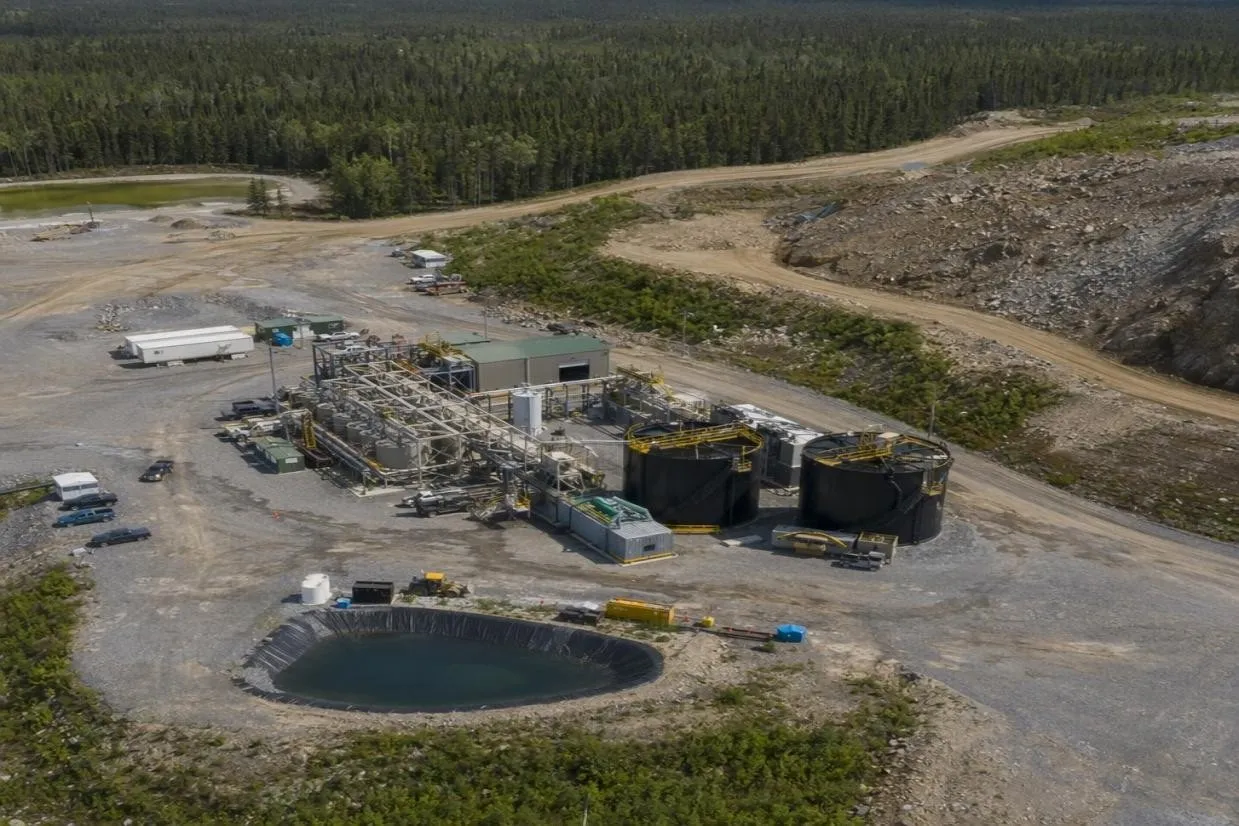
Technical Scenario 2: Controlling Carbon Consumption and Gold-Bearing Fines in a Northern Canadian CIL Circuit
|
Illustrative circuit image; no specific customer or site test data referenced. |
|
Typical Operating Challenge: Elevated carbon make-up and gold-bearing fines can reflect product weakness, handling damage, transfer equipment, screen condition, agitation, regeneration, or changes in ore abrasivity. A cold-climate location may also affect storage, logistics, maintenance access, and sampling practice, but temperature should not be presented as the cause of attrition without site evidence. Technical Assessment: Audit the carbon path from delivery and storage through pre-wetting, adsorption, transfer, elution, regeneration, and return to circuit. Compare incoming and in-circuit particle-size distributions, identify where fines first increase, and use the site's approved sampling and assay procedures to determine whether relevant fine fractions carry gold. YICARB® Technical Approach: YICARB® would select an AU Series trial grade based on the circuit's adsorption and mechanical requirements and would provide batch documentation for traceability. Recommendations affecting pumps, screens, agitators, or regeneration equipment should be reviewed and implemented by the mine's qualified personnel. Verification Before Any Performance Claim: Use matched baseline and trial periods and record carbon make-up, particle-size change, screen interventions, carbon movement, elution and regeneration condition, and gold associated with sampled fines. Financial claims require the mine's validated mass balance and cost model. Learn More: For verified site case studies with authorized mine data, contact our technical team to request confidential project references. |
|
Review Area |
Baseline Evidence |
Trial Evidence |
|
Delivery and storage |
Condition and handling records |
Same checks for the trial shipment |
|
Carbon particle size |
Incoming and in-circuit distributions |
Use matched sampling points |
|
Fines and screens |
Sampling, assays and intervention log |
Keep definitions consistent |
|
Carbon make-up |
Reconciled inventory records |
Record process and ore changes |
|
Elution and regeneration |
Operating history and return-carbon tests |
Confirm comparable cycles |
|
Publication rule |
Validated mass balance |
Customer authorization required |
|
Review Area |
Baseline Evidence |
Trial Evidence |
|
Delivery and storage |
Condition and handling records |
Same checks for the trial shipment |
|
Carbon particle size |
Incoming and in-circuit distributions |
Use matched sampling points |
|
Fines and screens |
Sampling, assays and intervention log |
Keep definitions consistent |
|
Carbon make-up |
Reconciled inventory records |
Record process and ore changes |
|
Elution and regeneration |
Operating history and return-carbon tests |
Confirm comparable cycles |
|
Publication rule |
Validated mass balance |
Customer authorization required |

Products
Solutions
Performance
Markets & Cases
Resources
Manufacturing & Quality
About Us
Contact Us

Copyright © 2026 Guangdong Yicarb Activated Carbon Co., Ltd. All Rights Reserved.