
Australia
• Market focus: CIP, CIL and CIC gold recovery operations
• Common review areas: particle-size control, attrition, loading consistency and regeneration stability
• Supply considerations: batch consistency, documentation and long-distance logistics
• Content rule: use market-specific process context without implying a named customer
Technical Scenario 1: Diagnosing Screen Blinding, Carbon PSD and Attrition in a Western Australian CIP Circuit
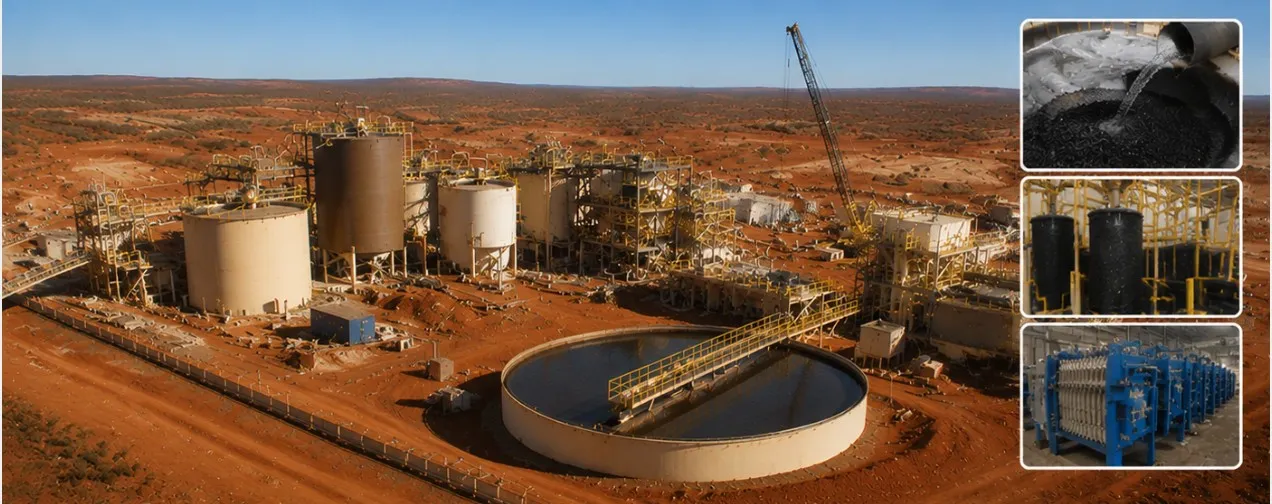
Illustrative circuit image; no specific customer or site test data referenced.
Typical Operating Challenge: Carbon reaching elution below the expected loading target is not, by itself, proof of inadequate activated carbon. Loading is influenced by the solution gold profile, carbon concentration and advance rate, contact time, adsorption kinetics, equilibrium capacity, fouling, elution efficiency, and changes in ore or solution chemistry.
Technical Assessment: Build a stage-by-stage profile of dissolved gold and gold on carbon, then compare fresh and regenerated carbon using the same laboratory method and site solution where possible. Review recent changes in feed, carbon inventory, elution, regeneration, and carbon movement. Iodine number alone should not be used to explain a plant loading problem.
YICARB® Technical Approach: YICARB® would screen the AU Series against the site's process objectives through laboratory comparison and a controlled plant trial. Grade selection should consider both adsorption rate and equilibrium loading together with hardness, particle-size distribution, ash, and regeneration stability. The trial protocol should define sampling locations, frequency, and decision criteria before the product is introduced.
Verification Before Any Performance Claim: Compare the complete solution and carbon profiles before and during the trial, while recording carbon advance rate, carbon inventory, elution efficiency, regenerated-carbon condition, and relevant ore changes. Any statement about higher loading, lower consumption, or financial value must be calculated from the mine's approved mass balance rather than inferred from a product specification.
Learn More: For verified site case studies with authorized mine data, contact our technical team to request confidential project references.
• Market focus: CIP, CIL and CIC gold recovery operations
• Common review areas: particle-size control, attrition, loading consistency and regeneration stability
• Supply considerations: batch consistency, documentation and long-distance logistics
• Content rule: use market-specific process context without implying a named customer
Technical Scenario 1: Diagnosing Screen Blinding, Carbon PSD and Attrition in a Western Australian CIP Circuit
Illustrative circuit image; no specific customer or site test data referenced.
Typical Operating Challenge: Carbon reaching elution below the expected loading target is not, by itself, proof of inadequate activated carbon. Loading is influenced by the solution gold profile, carbon concentration and advance rate, contact time, adsorption kinetics, equilibrium capacity, fouling, elution efficiency, and changes in ore or solution chemistry.
Technical Assessment: Build a stage-by-stage profile of dissolved gold and gold on carbon, then compare fresh and regenerated carbon using the same laboratory method and site solution where possible. Review recent changes in feed, carbon inventory, elution, regeneration, and carbon movement. Iodine number alone should not be used to explain a plant loading problem.
YICARB® Technical Approach: YICARB® would screen the AU Series against the site's process objectives through laboratory comparison and a controlled plant trial. Grade selection should consider both adsorption rate and equilibrium loading together with hardness, particle-size distribution, ash, and regeneration stability. The trial protocol should define sampling locations, frequency, and decision criteria before the product is introduced.
Verification Before Any Performance Claim: Compare the complete solution and carbon profiles before and during the trial, while recording carbon advance rate, carbon inventory, elution efficiency, regenerated-carbon condition, and relevant ore changes. Any statement about higher loading, lower consumption, or financial value must be calculated from the mine's approved mass balance rather than inferred from a product specification.
Learn More: For verified site case studies with authorized mine data, contact our technical team to request confidential project references.
Technical Scenario 2: Improving Carbon Loading Consistency in a Western Australian CIP Circuit
|
Illustrative circuit image; no specific customer or site test data referenced. |
|
Typical Operating Challenge: Carbon reaching elution below the expected loading target is not, by itself, proof of inadequate activated carbon. Loading is influenced by the solution gold profile, carbon concentration and advance rate, contact time, adsorption kinetics, equilibrium capacity, fouling, elution efficiency, and changes in ore or solution chemistry. Technical Assessment: Build a stage-by-stage profile of dissolved gold and gold on carbon, then compare fresh and regenerated carbon using the same laboratory method and site solution where possible. Review recent changes in feed, carbon inventory, elution, regeneration, and carbon movement. Iodine number alone should not be used to explain a plant loading problem. YICARB® Technical Approach: YICARB® would screen the AU Series against the site's process objectives through laboratory comparison and a controlled plant trial. Grade selection should consider both adsorption rate and equilibrium loading together with hardness, particle-size distribution, ash, and regeneration stability. The trial protocol should define sampling locations, frequency, and decision criteria before the product is introduced. Verification Before Any Performance Claim: Compare the complete solution and carbon profiles before and during the trial, while recording carbon advance rate, carbon inventory, elution efficiency, regenerated-carbon condition, and relevant ore changes. Any statement about higher loading, lower consumption, or financial value must be calculated from the mine's approved mass balance rather than inferred from a product specification. Learn More: For verified site case studies with authorized mine data, contact our technical team to request confidential project references. |
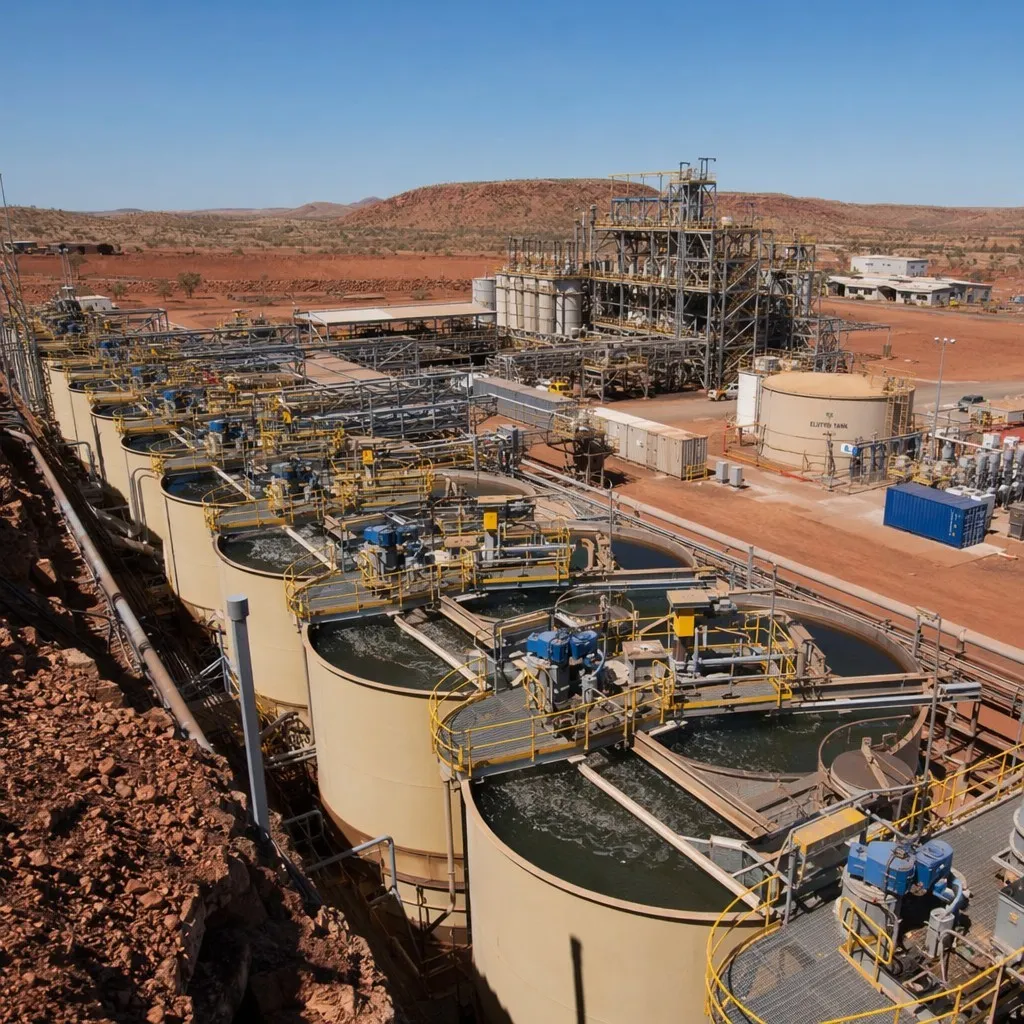
Technical Scenario 2: Improving Carbon Loading Consistency in a Western Australian CIP Circuit
|
Illustrative circuit image; no specific customer or site test data referenced. |
|
Typical Operating Challenge: Carbon reaching elution below the expected loading target is not, by itself, proof of inadequate activated carbon. Loading is influenced by the solution gold profile, carbon concentration and advance rate, contact time, adsorption kinetics, equilibrium capacity, fouling, elution efficiency, and changes in ore or solution chemistry. Technical Assessment: Build a stage-by-stage profile of dissolved gold and gold on carbon, then compare fresh and regenerated carbon using the same laboratory method and site solution where possible. Review recent changes in feed, carbon inventory, elution, regeneration, and carbon movement. Iodine number alone should not be used to explain a plant loading problem. YICARB® Technical Approach: YICARB® would screen the AU Series against the site's process objectives through laboratory comparison and a controlled plant trial. Grade selection should consider both adsorption rate and equilibrium loading together with hardness, particle-size distribution, ash, and regeneration stability. The trial protocol should define sampling locations, frequency, and decision criteria before the product is introduced. Verification Before Any Performance Claim: Compare the complete solution and carbon profiles before and during the trial, while recording carbon advance rate, carbon inventory, elution efficiency, regenerated-carbon condition, and relevant ore changes. Any statement about higher loading, lower consumption, or financial value must be calculated from the mine's approved mass balance rather than inferred from a product specification. Learn More: For verified site case studies with authorized mine data, contact our technical team to request confidential project references. |
|
Review Area |
Baseline Evidence |
Trial Evidence |
|
Solution profile |
Stage-by-stage dissolved-gold results |
Same locations and method during trial |
|
Carbon loading profile |
Gold on carbon by stage |
Comparable profile during trial |
|
Carbon condition |
Fresh and regenerated-carbon test results |
Same tests for the trial batch |
|
Carbon movement |
Inventory and advance-rate records |
Record any operating adjustments |
|
Elution and regeneration |
Efficiency and return-carbon condition |
Confirm no unrelated process change |
|
Publication rule |
Retain approved baseline and methods |
Publish only customer-authorized conclusions |
|
Review Area |
Baseline Evidence |
Trial Evidence |
|
Solution profile |
Stage-by-stage dissolved-gold results |
Same locations and method during trial |
|
Carbon loading profile |
Gold on carbon by stage |
Comparable profile during trial |
|
Carbon condition |
Fresh and regenerated-carbon test results |
Same tests for the trial batch |
|
Carbon movement |
Inventory and advance-rate records |
Record any operating adjustments |
|
Elution and regeneration |
Efficiency and return-carbon condition |
Confirm no unrelated process change |
|
Publication rule |
Retain approved baseline and methods |
Publish only customer-authorized conclusions |

Products
Solutions
Performance
Markets & Cases
Resources
Manufacturing & Quality
About Us
Contact Us

Copyright © 2026 Guangdong Yicarb Activated Carbon Co., Ltd. All Rights Reserved.